Monday, September 23, 2013

Matthew's "Tabernacle"

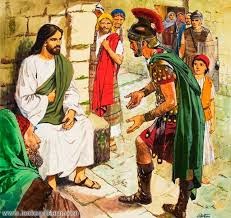
The Tabernacle motif, though implicit, plays a critical role in the Matthean narrative. The Tent of Meeting or Tabernacle symbolized, literally, God’s presence among God’s people (Exodus 35-40). In the 40-year sojourn of the Israelites in the wilderness, God was always with them via the Tabernacle, a pillar of cloud by day, and a pillar of fire by night. In other words, where the Tabernacle was, there was God. Matthew begins and ends with Immanuel, God-with-us (1.23, 28:20). Thus, the Gospel effectively sets the boundaries of its own “tabernacle.” Matthew creates a world of insiders and outsiders relative to this “tabernacle.” 1 And right at the middle of this “tent” is the greatest symbol of faith in the gospel—the centurion (Matthew 8:10).
The encounter between the centurion and Jesus, according to Musa Dube (in Postcolonial Feminist Interpretation of the Bible), particularly highlights Matthew’s stance toward the Empire. Both men are presented as having authority to effect things simply by the power of their words (Matt. 8:8-9). The comparison of Jesus’ authority with that of the centurion’s has the effect of sanctifying the imperial power. Jesus pronounces the centurion’s faith greater than the faith of everyone in Israel (Matt. 8:10), a statement that contrasts the imperial agent with the colonized and exalts his righteousness above theirs. The passage casts imperial officials as holier and predicts that they, and other groups, will have more power (in the kingdom of God). Such characterization not only disguises what imperial agents represent—institutions of exploitation and oppression—but also pronounces imperialism holy and acceptable. A quick survey of the history of the interpretation of Matthew and centuries of Western colonization—euphemistically called “civilizing missions”—in Asia, Africa, and Latin America shows that most interpreters followed the Gospel’s imperial rhetoric. In Matthew’s “tabernacle,” God’s presence is most evident in a military officer, in an imperial agent. The first one thousand years of Christianity was one millennium of war and destruction in the name of Jesus Christ. And those “civilizing missions” have not stopped. Even today, the most oppressive and dehumanizing societies are led by “Christian” centurions who have no qualms maiming and destroying those who are not “one of them.”
The centurion is to Matthew as the 30-caliber machine gun mount is to the military jeep. To read Matthew inside a jeepney is to celebrate the fact that the first thing Filipinos did in their transformation of the military jeep was to rid it of that machine gun mount. To read Matthew inside a jeepney is to remove our gaze from the centurion—and, yes, even Jesus, who mimics the centurion—and focus it on someone else. I suggest focusing our attention on the servant (pais in Greek) of 8:5-13. The pais, whether translated son, daughter, girl, boy, servant, slave, or sex slave, is a child. He or she serves to remind flesh and blood readers that the reality of empire—in varying forms and degrees—is experienced by children and by those who are treated as children. Political sociologist Ashis Nandy draws attention to the way the colonized are viewed as children by the colonizers.2 The pais reminds flesh and blood readers that children’s oppression—of varying forms and degrees—is written in the text because, despite the rhetoric that God’s reign is for children (Matt. 19:14), no child is ever named—except Jesus—or is given a voice in the gospel—except Herodias’s daughter, who says what her mother tells her to say. Like the Canaanite woman’s daughter (15:21-28) and the pais, Herodias’s daughter serves only as a medium through which competing discourses present their claims. The girl falls prey to manipulation by her mother and by Herod. We don’t even get to hear the cries of the children who are massacred in 2:18, only their mothers’ cries. Children are the primary victims of Matthew’s “culture of silence.” Look at how the pais is described in Greek: ho pais mou, “the servant who is mine.” That child’s body is under somebody else’s control—whether it’s his father, his owner, or, as I have argued elsewhere, his pedophile. The centurion’s act on the pais’s behalf emphasizes the latter’s marginalization. As far as Matthew is concerned, the pais cannot speak or seek his own healing. Yet, because that child is “paralyzed,” albeit momentarily, he also paralyzes his owner, who must seek help from Jesus. The child also interrupts the goings and the comings of the centurion’s soldiers, since the centurion is not with them to give them orders (Matt. 8:9). Thus, with his paralysis, the child also interrupts the imperial expansion. Throughout the Gospel, characters come and go, borders are crossed: magi from the East come seeking the king of the Jews (2:1-12); Joseph and his family flee into Egypt (2:13-15); Herod sends his death squads to Bethlehem to murder children (2:16-18); Joseph and his family go to Nazareth, from Egypt (2:19-23); Jesus goes to John the baptizer and is led by the Spirit into the wilderness (3:1–4:11); Jesus leaves Nazareth and makes his home in Capernaum (4:12); the centurion comes to Jesus and the latter is convinced of the imperial authority that effects goings and comings, travel to distant lands, and control at a distance (8:5-13). The disciples are systematically prepared for their commissioning (10:1-42); the Canaanite woman comes to Jesus (15:21-28); the heavy-laden come to Jesus (11:28). Jesus eventually sends out his disciples (28:16-20). Everyone in the story moves, except the pais in Matthew 8:5-13. Yes, even for a brief moment, the pais revels in the space her paralysis brings. For about eight short verses in the very long 28 chapters of the Gospel of Matthew, the pais is free of the centurion. The colonized is free of her colonizer.
Notes: 1. The Gospel of Matthew is a narrative discourse constructed against the backdrop of Roman imperial occupation. In other words, it is a story of people in this imperialistic situation. 2. See Leela Gandhi, Postcolonial Theory (New York: 1998), 32.

Thursday, September 19, 2013

Reading the Gospel of John inside a Jeepney

Jeepney hermeneutics is but one among many “Canaanite” readings. And it is a reading that (1) presupposes that the Bible is a “jeep,” an imperializing text, and that said jeep can be (2) transformed into a “jeepney.” Let me offer a brief example using the Gospel of John. Third World theologians have argued for decades that the connection of the Bible, its readers, and its institutions to Western imperialism do not call for special pleading. As Alan Lawson and Chris Tiffin insist: “Imperial relations may have been initially established by guns, guile, and disease, but they were maintained largely by textuality.” Simply put, the Bible was and is the key tool in the “textual takeover of the non-Western world” (Boehmer). Yet, most commentaries and expositions on John available in Philippine seminaries take for granted or do not find problematic the gospel’s imperial rhetoric. Spivey and Smith’s popular introductory text (Anatomy of the New Testament. New Jersey: Prentice Hall, 1995) describes the Gospel as reminding its readers that faith is “walking by the light of Christ, and walking the way he walked… it is dependent on the source of life, the only true God and Jesus Christ whom he has sent” (203). Both argue that Christians have tended to read the other Gospels, indeed the whole New Testament, in the light of John’s christological and theological constructions (203). Musa Dube points out that “Mission studies indicate that John’s Gospel has been the most influential text” (1998b: 132). Bart Ehrman’s The New Testament: A Historical Introduction to the Early Christian Writings (Oxford: Oxford University Press, 1997), another popular textbook, applies five methods in its analysis of John: literary-historical, redaction, comparative, thematic, and socio-historical. All five approaches lead to one major conclusion: “Whoever believes in the Son has eternal life now.” Adele Reinhartz (Befriending the Beloved Disciple: A Jewish Reading of the Gospel of John. New York: Continuum, 2001) resists John’s rhetoric because of its anti-Semitism. James Charlesworth (The Beloved Disciple: Whose Witness Validates the Gospel of John? Valley Forge: Trinity Press, 1995) using contemporary historical Jesus methodologies argues that Jesus’ beloved disciple was really Thomas and, contrary to feminist arguments, could never have been a woman. “Imperializing texts take many forms and are written by a variety of people, even by the colonized, either collaborating with the dominant forces or yearning for the same power. Regardless of who writes imperializing texts, they are characterized by literary constructions, representations, and uses that authorize taking possession of foreign spaces and peoples” (Dube, 1996:41-42). The Gospel of John, according to Dube, may have been written by an oppressed minority group and among the colonized Jews. This setting does not automatically guarantee that it is an anti-imperial text. Post-colonial studies indicate that the colonized do not always resist their oppressors: they also collaborate and imitate the imperial power at various stages of their oppression (1998b: 119).
Why is John a “jeep”? Dube brings the following questions to the text (2000:57-58): Does the Gospel have an explicit stance for or against the political imperialism of its time? Does it encourage travel to distant and inhabited lands and how does it justify itself? How does the Gospel construct difference: is there dialogue and liberating interdependence, or is there condemnation and replacement of all that is foreign? Is the celebration of difference authentic or mere tokenism? Does the text employ representations to construct relationships of subordination and domination? Dube points out that the problem of reproducing imperial strategies of subjugation is also evident among interpreters (2000:26). As Kwok Pui-lan posits, “They operate more from a hermeneutics of consent than a hermeneutics of suspicion. They have not dealt adequately with the harsh reality that the Bible discloses a hierarchical social order in which slavery and male domination are seldom challenged” (42). John’s imperial discourse pervades the whole gospel. The “Word” that became flesh (1.14) was with God and is, actually, God (1.1). All things came into being through him (1.3) and in him was life and the life was the light of all people (1.4). This “Word made flesh,” the one who came from heaven is above all (3:31) and thus greater than John the Baptist (1.20,3.30), Moses (1.17-18,3.13-15), Jacob (4.12), and even Abraham (8:58). This “Word made flesh” goes into Samaria and tells the woman by the well, “You worship what you do not know; we worship what we know, for salvation is from the Jews” (4.22). This “Word made flesh” is “The Bread of Life” (6.35), “The Light of the World” (8.12), “The Resurrection and the Life” (11.25), and “The Way, the Truth, and the Life” (14.6). And if every one of the things that this “Word made flesh” did were written down, “the world itself could not contain the books that would be written” (21.24). Dube points out that John’s Jesus, as savior of the world who is not of this world, shows a colonizing ideology that claims power over all other places and peoples of the earth (1998b: 132). Moreover Jesus’ followers receive a transference of power. Jesus tells them that they do not belong to the world because he has chosen them out of the world (15.19), and then he sends them out saying, “As the Father has sent me, so I send you” (20.21). In other worlds, Christians are not of this world yet they are sent into the world with the power to devalue and subordinate differences like John’s Jesus (Dube, 1998b: 130). With rhetoric like this it is not surprising, as Ali Mazrui points out, that Christianity, the religion of the underdog, became an imperial religion (Dube, 2000:11). More than this, the gospel’s reception history is, on the whole, an expected response to its imperializing rhetoric. Back to my metaphor, the gospel is a jeep. And most of its interpretations, especially those available in seminary libraries in the Philippines, are jeeps. All of the interpreters I have quoted above present legitimate readings. They are relevant to communities that find them relevant. But Good news is always relative. Many interpretations that ignore or even perpetuate John’s imperial rhetoric are products of the hermeneutics of consent. Many interpretations that challenge the gospel’s discourse are products of the hermeneutics of suspicion. It is tempting to classify Reinhartz’ reading as an example of jeepney hermeneutics. She has problems with compliant readings of John. Hers is a resistant reading to the gospel’s constructions of representations and structures of relationships. Ehrman too raises the problem of anti-Semitism in his discussion. Both then find problematic the anti-Jewish sections of the narrative and argue for alternative, liberating readings. On the other hand, both completely ignore the imperial ideology of the gospel. Jeepney hermeneutics, as decolonizing interpretations, suspects both text and interpretation. Ehrman employs a hermeneutics of suspicion as far as John’s reception history is concerned. Unfortunately, he employs a hermeneutics of consent as far as the “source text” is concerned. The Bible remains authoritative, normative, archetypal, God’s special revelation, blameless. Those responsible for Christianity’s sins are the Bible’s interpreters. Gomang Seratwa Ntloedibe-Kuswani cautions that an imperial ideology—that Christianity is the superior religion over all others and its God the real God—underpins the colonialist communication theory of “source text and receptor languages.” The Bible is the given and cannot be changed, languages, cultures, and peoples can and must be changed to make room for the Bible. Thus, even in translation work, there exists the colonizing ideology that renders receptors into slaves of the “source text” (80-81). Ntloedibe-Kuswani quotes Aloo Mojola who argues that translation is never neutral. It is an instrument of ideological and theological formation grounded on fidelity and faithfulness to the source text (81). Spivey and Smith are faithful to the “source text.” And so is Charlesworth. He is totally indifferent to the inherent problems of the Johannine rhetoric and instead uses the narrative as a window to a historical past, a privileged past, in order to find a historical beloved disciple. Kwok Pui-lan, I might add, classifies past and contemporary historical Jesus quests as imperialistic in nature: the West’s need for the “noble savage.” Sugirtharajah’s comments are more pointed: “The whole enterprise serves as an example of how the dominant discourse holds on to its deep-rooted Eurocentric bias, namely the assertion that anything theologically worthwhile can only emanate from Greco-Judeo traditions… Eurocentrism works on a double premise. It looks to Greece for its intellectual and philosophical roots, and dips into its Judaic heritage for its religious origins” (1998b: 113). Reading John inside a jeepney requires privileging Filipinos and their plight as modern-day “Canaanites,” insisting that the Bible informs, it does not define, life, and engaging the biblical text in search of the marginalized, the subaltern, the “Canaanite” characters—those whom Gandhi describes as “the ones who disappear because we never hear them speak. Those who only serve as medium for competing discourses to represent their claims.”
The paidarion, the lad of John 6:9, like the pais of Matthew 8:5-13 that I have argued as symbolic of Filipinos (2000:25-32; 2003), can also represent the continuing plight of Filipinos. Fred Atkinson, the first American General Superintendent of Education in the Philippines inaugurated over a century of racist public education in the islands when he remarked: "The Filipino people, taken as a body, are children and childlike, do not know what is best for them ... by the very fact of our superiority of civilization and our greater capacity for industrial activity we are bound to exercise over them a profound social influence"(Schirmer, 1987: 43-44). The child who offers the five loaves and two fish is absent from the Synoptics. Only in John is the source of the food identified. In the midst of a crisis involving adults, a child’s food is appropriated. The crisis is averted. Jesus is praised. The child disappears into the background from whence he came. He is never thanked. He is never mentioned again. The child gets one verse in the entire 21 chapters of the gospel. Filipinos, numbering over seven million, offer “loaves and fish” to countless peoples throughout the world as overseas contract workers. Many do not even get “one verse.” As De Quiros points out, “They do not figure in the narrative.” The Samaritan woman is another character that can represent Filipinos. Dube, going against the traditional feminist reading of John 4, presents the woman at the well as illustrative of control-at-a-distance strategies of empire (1996: 37-60). I agree. Spain and America domesticated the mujer indigena for over four centuries and turned her into their most effective subject. Yet like the woman at the well, despite being told that her worship was wrong and she did not have to fetch anymore water because of what Jesus was offering her in terms of “correct worship” and “eternal springs of water,” still left her jar by the well. Fernandez points out, “Though subjected to the most sophisticated political machinations and cultural genocide, the Filipino soul has never been totally crushed.” “Useless” is a relative term. The tens of thousands of rusted military jeeps the US Army thought useless at the end of World War II in the Philippines, Filipinos found useful as raw materials for what was to become the most popular mode of public transportation in the islands, the jeepney. Paul’s letter to Philemon is explicit--that for a while, Onesimus was “useless.” I read that to mean that for a while he ceased being a tool to either Paul or to Philemon or even to Christ. For a while, Onesimus was not Paul’s child, not a part of Philemon’s household, nor Christ’s slave. For a while, Onesimus was free. Dube’s reading complements mine. She explains why John is a “jeep” (to use my metaphor) by comparing and contrasting the Gospel with other imperializing texts like Joseph Conrad’s Heart of Darkness and the epic, Aeneid (1998b: 119). Dube refuses to read the biblical text in isolation from other works of literature and is thus able to argue that John’s colonizing ideology that claims power over other peoples and places on earth is not so different from other constructions in secular literature (1998b: 132). I, on the other hand, “fished” for characters that formed a totally different narrative. In other words, I took the “jeep” and transformed it into a “jeepney.” TO BE CONTINUED

Tuesday, September 17, 2013

Reading against "Authorial Intent"

I have been privileged to participate in learning situations that showcase the wealth of Filipino practices and reading strategies that engage the Bible in unexpected ways. The works of Edicio dela Torre and the late Carlos Abesamis offer excellent examples. You can try these: Take a regular Bible Study session among women. Let them role-play a passage in the Bible. Let’s say, Luke 10:38-42, Jesus visits Martha and Mary. In my experience, most women WILL NOT follow the biblical script. They will change the story. In my biblical writings class this term my students, in six groups, role-played the passage and came up with six different interpretations. Not one followed the original script. Take a nursery Sunday School class. Tell the story of Jonah. Most adults will identify with the plight of Jonah, including the nursery teacher. But children have no problem reading the text from the perspective of the fish, the vine, and the worm, all of whom, by the way, obey God. I call these readings interpretations that go against “authorial intent.” The jeepney is an example of going against authorial intent. I do not believe for a second that Willys or Ford imagined that the military jeep could become a Filipino home on wheels.

Monday, September 16, 2013

Reading like Canaanites...

Jeepney hermeneutics is an example of “reading like a Canaanite” (see Laura Donaldson and Jace Weaver), “re-invading the land” and "re-claiming stolen spaces" (Leticia Guardiola-Saenz), and beating swords into plowshares. This proposal addresses contextual issues, concrete life settings among Filipinos. “The Canaanites are, of course, the much vilified people who occupied the ‘promised land’ before the arrival of the wandering Israelites. Yet they also stand in for all peoples whose lands have been conquered and expropriated” (Donaldson). Filipinos, as one of the most colonized peoples in the world (Eleazar Fernandez), are modern-day Canaanites. Reading the Bible inside a jeepney simply means creating space, offering a home for Filipino “Canaanites” to think, to speak, to sing, to commune in Canaanite languages.

Wednesday, September 04, 2013

Beating Jeeps into Jeepneys...

Jeepney readings have at least three distinct characteristics, three explicit choices, textual, theological, and contextual, made by the reader. First, as far as textual choices are concerned, it involves reading texts by disregarding, setting aside, or resisting imperial rhetoric, its agents and those who mimic them (getting rid of the jeep's machine gun mount). This means privileging what Renita Weems calls “random aberrant outbursts in a world otherwise rigidly held together by its patriarchal attitudes and androcentric perspective.” This means privileging the subaltern in texts, not just the “voices from the margins” but also the “voiceless from the margins,” what Leela Gandhi describes as “the ones who disappear because we never hear them speak. They only serve as medium for competing discourses to represent their claims,” like the pais in Matthew 8:5-13 and Onesimus in Paul’s letter to Philemon. This fundamental choice, this switch of focus from center to periphery allows the marginalized in the text to “mirror” the plight of the marginalized in front of it. This is akin to Delores Williams’ argument about the power of Hagar’s story to inform and inspire the continuing struggle of many African-American women.
Jeepney hermeneutics involves a fundamental theological claim that the insights, stories, and answers the Bible provide (like the three-seater jeep) are not enough and may even be wrong or hurtful for the questions being asked by many communities, thus the need to create space for other texts that help inform—not define—peoples’ lives and struggles (therefore, the necessity of the sixteen, or more, passenger jeepney). Jeepney hermeneutics creates space for other voices, for Filipino “traditions, myths, legends, to harness insights, values and inspiration towards the full flowering of communities and persons” (Mananzan). Jeepney hermeneutics then takes seriously the affirmation that God and God’s activity is bigger than the Bible, bigger than Christianity, and even bigger than Jesus Christ. God did not arrive in the Philippines in 1521. God was already here. According to Mark Taylor: “The Bible, once the “sword” of the imperial spirit, will have to find its new possibilities amid many other spirits that its Christian bearers often spurned.”

Thursday, August 29, 2013

How does one do Jeepney Hermeneutics?

It begins with one’s view of scripture. As Vanderbilt University's Daniel Patte points out in conversation, “Traditional roles of scripture are problematic, when they involve submission to the text, or more exactly, defining the authority of the text in terms of moral prescriptions or vision (ideology, religious views, etc.) that it posits or carries.” Many interpreters of Scripture begin with the theological affirmation, explicit or not, that the Bible is “God’s Word” and that it offers access to the Complete and Final Revelation of the One True God, Jesus Christ. Jeepney hermeneutics presupposes that the Bible is a “jeep,” a sword, an imperializing text – a dangerous text, as demonstrated throughout history by the many horrendous crimes committed in its name (see for instance, Susanne Scholtz, ed. Biblical Studies Alternatively: An Introductory Reader [2002]).
Imperializing texts, according to Musa Dube, take many forms and are written by a variety of people, even by the colonized, either collaborating with the dominant forces or yearning for the same power. She adds, “Regardless of who writes imperializing texts, they are characterized by literary constructions, representations, and uses that authorize taking possession of foreign spaces and peoples… Reproduction of imperial strategies of subjugation is also evident among many interpreters.” I draw heavily from Dube’s work with the following questions in explaining why many biblical texts are imperializing and why many of their interpretations are the same. (1) Does the text have an explicit stance for or against the political imperialism of its time? (2) Does it encourage travel to distant and inhabited lands and how does it justify itself? (3) How does the text construct difference: is there dialogue and liberating interdependence, or is there condemnation and replacement of all that is foreign? Is there celebration of difference authentic or mere tokenism? (4) Does the text employ representations (gender, ethnicity, sexuality, divine, etc.) to construct relationships of subordination and domination?

Tuesday, August 27, 2013

The Jeep...

The U.S. Army, back in 1940, required an all-terrain reconnaissance, go-anywhere, vehicle that seated three and had a mount for a 30-caliber machine gun. Filipinos have turned this military vehicle into a sort of mini-bus that can accommodate about twenty people. There are those who look at a jeepney and call it Frankenstein’s monster. There are others who see it as a “Filipino home on wheels,” complete with an altar.
The military jeep was, and still is, a sort of imperializing text. A jeepney resists this text. The inventors of the jeep never imagined that this weapon of mass destruction can be transformed into a public transport vehicle. The jeepney is an “unexpected reading” of a jeep.

Friday, August 23, 2013

Jeeps, Jeepneys, and Jeepney Hermeneutics

Mark Lewis Taylor, during the 2000 Society of Biblical Literature meeting, celebrated the publication of the Dictionary of Third World Theologies (Virnia Fabella and R.S. Sugirtharajah, eds.) and called it "A Dictionary for Resisting Empire." For him, the volume summarizes critical reflection arising from people's movements in resistance to "empire," i.e. to the hegemony of Western powers whose metropole centers seek an ever-strengthened global power to subordinate and control each and every facet of the lives of masses of peoples. For him, the book preserves and marshals the archival power of Third World peoples' own discourse of resistance and liberation. To this developing archive I have proposed one model of Filipino decolonizing reading, jeepney hermeneutics. If the Filipino jeepney is a “resistant reading” of the U.S. military jeep, then jeepney hermeneutics is a "resistant reading" of the Bible. Biblical Studies is one area that remains a stronghold of colonial scholarship, especially among Protestant Churches. Many Filipino social scientists call this collective condition of the Filipino psyche as colonial mentality. Historian Renato Constantino traces it to the systematic mis-education of the Filipinos. Theologian Eliezer Fernandez argues that the Philippines can be called a "mental colony" of the United States of America. The late Fr. Carlos Abesamis, SJ, had argued that nothing is the matter with foreigners doing foreign theology (for themselves). The issue is that Filipino theology is a photocopy of Euro-American theology. Jeepney hermeneutics challenges this colonial mentality in biblical studies by drawing on the Filipinos’ legacy of resistance. From mortar shells to church bells, from implements of death to instruments of music, from jeeps to jeepneys, Filipinos have turned weapons of mass destruction to symbols of mass celebration. The colonization of biblical studies, especially in the field of hermeneutics, among Protestant communities in the Philippines requires no special pleading. Thus there is the need for a decolonized hermeneutics—a jeepney hermeneutics. Jeepney hermeneutics acknowledges the depth and the breadth of meanings represented by the Filipino Jeepney as symbolic of a people’s ability to beat swords into ploughshares.

Tuesday, August 20, 2013

Remembering FPJ

Most Filipinos love stories, telling them, listening to them, or watching them. Filipinos who do not enjoy movie watching are quite rare. I remember the moviehouses in the barrios where we used to go during summer vacations. Most of these had double programs. Your ticket bought you two movies to watch. A few had triple programs. We saved up for those triples, especially if they starred the late Fernando Poe Jr. who should have turned 74 today. We came in before lunch and came out six or so hours later. My kuya (older brother) and I are FPJ fans. In grade school I saw my kuya, on two occasions, apply the FPJ rapid-punching technique on two bullies bigger and taller than him. The technique worked. I was 7 when I first went to see a movie by myself. It was FPJ’s Asedillo. It was the first movie I saw that painted a totally different picture of America, and Manuel Quezon, and the period of American occupation many among our elders, even today, longingly call “peacetime.” It was the movie that introduced me to the Sakdal uprising of the 1930s. I was in high school when I saw Aguila. I consider it one of the best movies Philippine cinema has ever produced. Aside from FPJ, it had Christopher de Leon, Jay Ilagan, Sandy Andolong, Eddie Garcia, Johnny Delgado, Charo Santos, Amalia Fuentes, and a host of top caliber artists. Basil Valdez sung the theme song. The 3 ½ hour movie presents a stark portrait of Philippine society and offers at least four ways of dealing with its reality: join the underground, go to America, learn to deal with it, or live with the indigenous communities. If you haven’t watched Aguila and Asedillo. Go and do so. Then you will know why those who call FPJ the Arnold Swarzenegger of the Philippines don't know what they're talking about. And as you watch Asedillo and Aguila (both are available online), remember that FPJ was busy helping prepare relief goods for distribution on the night he suffered a massive stroke. Better still, we can remember FPJ's birthday by celebrating our birthdays, anniversaries, and special occasions by reaching out to those whose only hope is God, by contributing the best we can offer to those who need God the most, by being each other's keepers the best way we can. Especially today.

Friday, July 19, 2013

Martha, Mary, and Jesus

MARTHA, MARY, AND JESUS LUKE 10: 38-42 While doing his rounds Jesus finds St. Peter, at the pearly gates, looking worn out and very, very tired. “Rocky,” he says to his friend, “why don’t you take a break. I’ll handle the processing for you.” “Thanks, Jesse,” Peter replies with glee and leaves. With his rooster. Jesus takes over and as he looks down the long line of people being processed, he notices an old man who looked very, very familiar. Jesus feels he knows the old man. Eventually, he is face to face with the old man. Jesus asks, “Sir, what did you do when you were back on earth?” “I was a carpenter,” the old man replies. The reply got Jesus very excited. “What made your life very special then?” he continues. “I had a very special son,” was the reply. A carpenter who had a special son? This gets Jesus more excited! “What can you tell me about your son?” Jesus draws closer as he asks. “Nails and wood!,” the carpenter answers. Nails and wood? Jesus was beyond ecstatic. He blurts out, “Father?” The old man responds, “Pinocchio?” Diversity is a gift. Difference is a fundamental fact of life. No two people are exactly alike. No two fingerprints are exactly alike. The same goes with experiences. And UTS seminarians. Plurality is a gift. Father and son, nails, and wood do not always point to Jesus. They can also point to Pinocchio. There is always more than one reading of a text, including what Prof. McDivith calls “Living Human Documents.” Actually, there is legion. Interpretation is always particular and perspectival. Good news is always relative. When David killed Goliath, it was good news to Israelites, bad news to Philistines, and tragic news to Goliath’s mother! Our lectionary reading for Sunday, the story about Martha, Mary, and Jesus, has been interpreted throughout the centuries in so many different ways. Yes, legions. Prof. Antonio Pacudan has a very good essay on the Lukan passage in Anumang Hiram where he celebrates the discipleship of Martha. He also contrasts the characterization of Martha in the Gospel of John. In her essay, “Scandal in Bethany” (in Babaylan Volume 1), Prof. Lily Ledesma celebrates Mary and her quest for learning and education at the feet of Jesus (a typology that should remind us of Paul learning at the feet of Gamaliel). Two weeks ago, the Juniors in four groups role-played this passage. One group had Martha being portrayed by a man who was busy preparing the meal. The gathered community convinces Martha that the meal can wait so everyone can study together. Everyone then prepares the meal and all share the food, including the audience. Another group situates the interpretation of the passage inside a church building during worship where many of the members of the congregation are, like Martha, distracted by other things: their cellphones, talking with others, or, simply, impatiently waiting for the service to end. A group, broke the fourth wall, by conjuring up a narrator, a lizard (a very big lizard actually) on the wall, filling in the gaps in the familiar story. The fourth group had Martha and Mary reminding Jesus what he taught them, servant leadership, so Jesus actually prepares the meal for the gathered community. I have always believed that God’s greatest gift to UTS is not the land. It is not even the mango trees. It is its people: seminarians, staff, and teachers; the choir who just sang; the middlers who will sing after my message; the sixteen dedicated young women and men whom you have elected to the student government; all of you! The six different interpretations of the same text I just shared with you only help to prove my belief! Now, I would like to share my reading. If we read our Bibles and pray every day, we will grow, grow, grow in the realization that Luke and Acts are a two-part work, like Rizal’s Noli and Fili. Many students of the Bible do not read the Bible, they either read books about the Bible or very small parts. Many seminaries and bible schools are well-known for proof texting. UTS is not one of them. One of the best ways to understand scripture is to read each passage as part of a greater whole. Luke 10:38-42 is part of Luke 10. Luke 10 is part of Luke. Luke is part of Luke-Acts. Liberation Theologians have argued for years that Luke-Acts is the best source for underpinning the church’s preferential option for the poor. Good news is proclaimed to the poor. The Sermon on the Plain declares blessings to the poor and woes to the rich. The rich are challenged to sell everything they have, give all the proceeds to the poor, and follow Jesus. The Acts tell of communities where no one was in need and where ministry to widows and orphans and strangers were a priority. I have previously argued that the Roman Empire was built on five pillars. First. The Legions, 6000 soliders each, protected the borders of the empire. There were 28 Legions. Second. The Roman roads secured communication, transportation, and delivery of goods and services. Third. Power resided on the landed and the rich, where fathers possessed everyone and everything in the family and had power of life and death over each. Fourth. Ideology. Actually, theology. Rome is a gift from the gods, and Caesar was the Son of God. Caesar was LORD. Each subject of the empire was required faithfulness. Pistis. Fides. Fifth. Now those who defied Pax Romana was either jailed, exiled, or executed. Death to enemies of the state came via crucifixion. The first century movement that included Jesus, Mary Magdalene, Peter, Martha and Mary of Bethany, and many others was, I dare say, built on five pillars as well. First, if the Roman Empire had legions to secure the borders of the Roman empire, “God’s empire” had house churches all over, and Martha’s home was one of these. Second, Rome’s economics was built on roads which they guarded and controlled; God’s empire was built on the open table. An open table is where everyone, even those who could not share anything, was welcome to partake of bread, to share wine, to have fellowship. EVERYONE. Third, if Rome’s empire drew its power from the powerful and those who possessed, God’s empire came from the powerless, the poorest of the poor, those whose only hope is God, the dispossessed. Fourth. For Rome, Caesar Augustus was the Son of God. For God’s Empire, Jesus, the carpenter, the Galilean, the one who spoke with a strange Northern accent, was the real SON OF GOD. Jesus, not Caesar, is LORD. Fifth, Rome had the power execute anyone, but God can raise up everyone that the empire executes. In response to Rome’s threat of death and execution, the movement believed in the promise of Resurrection in God’s empire. Read against a backdrop of these pillars of the Basileia movement, we can find historical memory in the passage we are studying: Martha and Mary’s home was a house church, open to everyone. A sanctuary. Martha was involved in the ministry of the open table, Eucharistic table ministry. Jesus’s admonition to her that “there is need for only one” is a reminder to us that, one dish was enough, “tama na ang isang ulam,” especially for the poorest of the poor who were most welcome in these house churches. The fact that Jesus is called LORD three times in the passage reminds us of the movement’s most fundamental, SUBVERSIVE affirmation, JESUS IS LORD AND NOT CAESAR! And what about choosing the better part? But what is the better part? Martha and Mary’s sanctuary was a simple home, not a cathedral most churches today want their worship places to be. Jesus admonished Martha that the open table needed just one dish for everyone, not a feast or a banquet most of us believe are expressions of prosperity and fullness today. Moreover, Jesus’s lordship is not a declaration of absoluteness or greatness but a critique on those who abuse power and oppress the people for life, healing, restoration and resurrection for all. Jesus’s lordship is about taking the side of those who need God the most. The better part is evident in the story before this one: the Samaritan. In the midst of death, pain, suffering, abandonment, indifference, the Samaritan chooses life, healing, restoration. Resurrection. As we come together to share the open table, let us remember what the open table represents. Let us also remember what the affirmation, Jesus is Lord, requires from each of us and from all of us. Moreover, on Monday, July 22, we will be given the privilege to join those whom God has chosen to side with: the farmers, the fisherfolk, the laborers, the masses, those whose only hope is God… outside congress for the People’s SONA. They have much to teach us. We have a lot to learn from them. They will teach us how to struggle for life, for healing, for justice, for liberty, and for land. They will teach us how to celebrate over one simple dish. They will show us what taking sides really means. They will show us the real meaning of rising up and not giving up against all odds. Finally, they will show us what resurrection is really all about. AMEN. Revelation Enriquez Velunta Union Theological Seminary, Philippines 18 July 2013

Tuesday, May 15, 2012

Mothers and Prophets

MOTHERS AND PROPHETS Oxnard United Church of Christ, 13 May 2012 Every time a child is conceived, God begins creating two miracles. Two: a new life and a mother. Almost all our favorite characters in the Bible are prophets: from Miriam, to Moses; from Elijah to John the Baptist; from Huldah to Anna. God gave us these prophets. God gave us their mothers. I am here this morning to talk about two of these mothers… Let’s start with Hannah. Most of us here probably remember her story. She was loved but she was barren and in a society where barrenness was considered a curse, she cried and prayed and pleaded to Yahweh to remember her and Yahweh did. She gave birth to a son and named him Samuel, which meant, “I have asked him of Yahweh.” And in her prayer in Chapter 2, comparable to the power and the passion of Mary’s Magnificat in Luke 1. 46-55, we encounter a mother’s faith, a faith I’m sure she taught her son, a faith that continues to challenge us today… Let me read some of her prayer’s most powerful affirmations… The bows of the mighty are broken, but the feeble gird on strength, God kills and brings to life, God brings down to Sheol and raises up, God raises up the poor from the dust, God lifts the needy from the ash heap However you read Hannah’s Prayer the message is clear—God will make things right. And most important, God is on the side of the poor, of the oppressed, of the hungry, of those whose only hope is God. This was the faith of Hannah, the same faith her prophet son, Samuel, had. Most of us here probably remember the son more than his mother. The message has not changed. Hannah and Samuel’s faith remain. We worship and serve a God who actually takes sides. If we read our Bibles and pray everyday, which I hope everyone in Oxnard does, then we will grow, grow, grow in the knowledge that the God we serve and worship has always been on the side of the poor. From Genesis to Revelation, we read about our covenant relationship with Yahweh that requires us to take care of the widows, orphans, strangers and foreigners, yes, illegal immigrants, among us. From Genesis to Revelation, we are enjoined to feed the hungry, offer drink to the thirsty, welcome the sick and the stranger, clothe the naked, and visit the sick and the imprisoned. We know whose side God is on but are we on the right side? Those of us who take pride in calling ourselves Christian, are we on God’s side? Do we let poor widows give everything they have, even the little money left to buy food, so that we can build our temples and our buildings as monuments to our messianic complexes? Mary of Nazareth believed in a God who brings down rulers from their thrones but lifts up the humble. She believed in a God who fills the hungry with good things but sends the rich away empty. And this faith, I know she taught her Son, the One we call Lord and Savior. Hannah and Mary knew what God required of us. It is not burnt offerings or ten thousand rivers of oil or mighty buildings. Then and now, God requires of us to do justice and to love kindness and to take sides…And the message will never, ever, change. We worship and serve a God who takes sides. A God who takes the preferential option for the poor. A God who brings down kings and kingdoms. A God who weeps with those who weep and who cries with those who cry. We worship and serve a God who, in the fullness of time, in the life and ministry of one Jesus, son of Mary from Nazareth, did the greatest act of taking sides—God became one of us. God left heaven to be with us. And God continues to take sides—as we encounter God among the least of the least, among the hungry and the thirsty, among the prisoners, the strangers, and the sick, among the homeless and the naked, among those devastated by nature’s wrath and by humanity’s greed, among those whose only hope is God. Let me share with you a story told by John Dominic Crossan, probably the most read Historical Jesus researcher today: He imagines a conversation with Jesus. He asks Jesus what he can say about Crossan’s research. Jesus says he has done great work, his research is excellent, and his reconstruction of Jesus is the closest to the real person. Crossan is ecstatic about Jesus’ praise, until Jesus adds: “One thing you lack.” And Crossan, asks: “What is it, Lord?” And the reply: “Sell everything you have, including all the royalties you’ve received from the books you’ve written about me; give the proceeds to the poor, and follow me.” Crossan says, “I cannot, Lord.” Yes, my dear sisters and brothers, the final test. Those of us who take pride in calling ourselves Christian, worship and serve a God who takes sides; but most importantly, the Christ we worship and serve wants us to sell everything we have, give all the proceeds to the poor and follow him. Hannah and Mary gave the very best they could offer to God: their children. And their children did so, as well. They offered the very best. They gave their lives for others. Are we ready to do so? Did our mothers teach us to do so? For most of us, our mothers taught us how to care and how to share. They showed us how to live in love, how to pray. Our mothers taught us how to live through life’s pains. They showed us how to give our lives for our friends. Our mothers taught us how not to be afraid. Their love showed us that, whatever happens, we will never, ever, be alone. For many people, IMMANUEL, God-with-us, is actually spelled M O T H E R. Again, I ask: are we ready to offer our very best? Did our mothers teach us to do so? I believe they did. I know they did. Amen.

Thursday, April 05, 2012

LAST WORDS...

LAST WORDS Last words are important to many of us. Famous last words include Rizal’s “Mi Ultimo Adios” and Antonio Luna’s “P___ -Ina!” The thousands among us who watched the coverage of FPJ's wake several years ago will remember the variety of remembrances of people who talked about his last words to them. My late mother's last words to me--when we were in the very cold Emergency Room of the Philippine Heart Center--were: "Anak mainit, paypayan mo ako." And, of course, the most famous last words ever memorialized would be Jesus’s Seven as found in the gospels: Mark and Matthew have one; Luke has three; and John has three. Many Christians do not read the Bible. We read books about the Bible and parts of the Bible. If the Gospels were movies, the way most of us “read” is akin to watching only parts of a movie, not the whole show. Now, who among us only watch parts of a movie or telenovela--5 minutes of Harry Potter and The Deathly Hallows or 10 minutes of Amaya? The Gospels are complete narratives. I propose studying Jesus’s Last Words based on that fundamental assumption. In other words, if Mark, Matthew, Luke, and John were movies or telenovelas, then Jesus’s dying words play important roles in how the stories play out. Last Words-- Matthew If one reads Mark and Matthew from beginning to end, one will discover that both narratives privilege Galilee as locus of God’s activity. Most of Jesus’s healing, teaching, and preaching ministry happen in Galilee. In the Matthean and Markan narrative Jerusalem is bad news. Jesus is betrayed in Jerusalem. Jesus is arrested, tortured, and executed in the Holy City. Jesus dies in Jerusalem. One can even argue that God forsakes Jesus in Jerusalem, thus at the point of death he cries, “Eli, Eli lama sabacthani?” or “My God, my God, why have you forsaken me?” Many of us who grew up in church and in Sunday school remember the countless number of Bible verses we memorized. Many of us hated the ritual. I know I did when I was growing up. We thought those verses were useless until something happened in our lives and then the verses suddenly took on a life all their own. The Jesus of Matthew was rooted in the Hebrew Scripture. At the lowest point in his life, near death, Jesus was not blaming God. He was quoting Scripture. Psalm 22 to be exact. I have witnessed people pass from this life to the life beyond and quite a few were quoting scripture. Remember that Matthew does not end with Jesus dying on the cross. The gospel ends with God raising Jesus from the dead. Psalm 22 begins with despair but ends with triumph and an affirmation of faith in a God who saves; a God who liberates. Especially the least among the least. Go and read it. Jesus’ last words in Matthew celebrate the promise of Immanuel. In life, in death, in life beyond death, we are not alone. God is with us. Always. Last Words—Mark In Mark, Jesus cries, “Eloi, Eloi, lama sabacthani” and dies. Unlike Matthew, the risen Jesus does not appear in the ending. Check your Bibles. The gospel ends in 16:8, where we find women silent and afraid. What we have in the story is a young man who tells the women that Jesus is going ahead of them to Galilee and will be waiting for them there. Jesus is not in the tomb. He is not in Jerusalem. He is not where we want him to be. He is back in Galilee where his ministry began and he is waiting for us there. And we are afraid. Why? Because we know that this path will eventually lead to the cross. We know that following Jesus will lead to suffering and, yes, death. Unlike Matthew, Luke, and John where we find beautiful stories of the resurrection—Jesus appears to Magdalene, to the disciples on the road to Emmaus, by the beach and eats breakfast with his followers, Mark offers a young man with a confirmation of a promise – Jesus is risen just as he told you. We do not see Jesus. We are told to believe he is risen. And it is only in going back to Galilee, in places we do not want to go, in ministering among the poorest and the most oppressed, that we will eventually find him. The last words of Jesus in Mark are dying words. The gospel does not end with Jesus’ triumphant words as a risen Lord but with a young man’s affirmation of God’s resurrection power: that hope is stronger than despair, that faith is greater than fear, that love is more powerful than indifference, and that life will always, always conquer death. Last Words—Luke Many Filipinos love the Gospel according to Luke. I read somewhere that our favorite parables are The Prodigal Son and The Good Samaritan. Both come from Luke. A lot of the scriptural support for the Roman Catholic Church’s theology of preferential option for the poor is based on Luke. God is definitely pro-poor in Luke. Jesus’s birth is announced to poor shepherds. Jesus's first sermon--which almost gets him killed--is a proclamation of good news to the poor. And this God who loves the poor so much is most often described as a loving parent. From Zechariah, the father of John the Baptist, to Mary, the mother of Jesus, to the Father of the Prodigal Son who waited patiently for his son’s return, to Father Abraham who takes poor Lazarus into his bossom… the Gospel of Luke reminds us, offers us metaphors of God’s unconditional love as parent. At the cross, two of Jesus’s last three words in Luke are addressed to his father. Jesus says, “Father, forgive them for they know not what they do.” If God is our parent and we are all God’s children, then we should ACT as brothers and sisters. This means not behaving like the older brother in the Parable of the Prodigal Son, or like the Rich Man in the Parable of the Rich Man and Lazarus. This means acting like the Good Samaritan who did not consider the wounded Jew as an enemy but as a brother. Jesus in Luke challenges his followers to love their enemies and to do good to those who hate them. Jesus set the example. We call ourselves Jesus followers but do we really follow? If Jesus is our "Kuya" then our words and our deeds should remind others of our "kuya." Bombing Afghanistan, invading Iraq, trampling on Philippine sovereignty in the guise of "visiting rights"-- are Jesus's brothers and sisters supposed to do these things? Jesus says to one of the criminals crucified with him, “Today, you will be with me in paradise.” Filipinos are social creatures. The worst punishment for Filipinos is solitary confinement. Many Filipinos turn on radios and televisions when they are alone, not to listen or watch, but simply to create a semblance of community. God’s salvation is a community project. No one can be a Christian alone. When God saves, God saves communities and peoples. To celebrate the incarnation is to celebrate that God has left heaven to be with us. So no one lives and dies alone. God is with us. In the midst of death on the cross, Jesus reminds his fellow victim that he is not alone. Hindi siya nag-iisa. Then Jesus says, “Father, into they hands I commit my spirit.” Luke follows Mark and Matthew’s lead here. Jesus also quotes an Old Testament Psalm. In this case Psalm 31. It is also like Psalm 22, a Psalm of deliverance. Jesus believed in a God who will never forsake. And God does not forsake Jesus. Many of us pray Jesus's prayer before we sleep at night. We commit everything to God, yet we stay up all night thinking of so many things only God has control over. Let us follow Jesus. Even in death, he knew that he was safe in God’s hands. We are never alone. We will never be alone. Last Words—John If one reads the Gospel of John from start to finish one will discover that the story celebrates the discipleship of the unnamed. In other words, the most effective followers of Jesus in the story have no names. The Samaritan woman by Jacob’s well, who runs to her people to share her experience with Jesus, is unnamed. The young boy who offers the five loaves and two fish so that Jesus can feed over five thousand people is also unnamed. The beloved disciple who plays a role bigger than Peter’s in the story is also unnamed. But most important of all, the only disciple who we find at the beginning and at the end of Jesus’s life is also unnamed: Jesus’s mother. We find the two—Jesus’s mother and the beloved disciple—at the foot of the cross. Jesus says to them, “Woman behold your son; behold your mother.” Jesus asks that his two faithful disciples take care of each other. Love is the key theme of the Gospel of John. God became human because of love. The world is supposed to be blessed by our love for each other. Jesus in John leaves his followers only one commandment—for us to love one another as Jesus loved us. Mothers behold your sons; sons behold your mothers; parents behold your children; children behold your parents. We are members of the family of God and our primary task is to live in love for each other, like a family: each one willing to offer one’s life for the other. Then Jesus says, “I thirst.” Again, in the Johannine story, particularly in his conversation with the Samaritan woman, Jesus is the Living Water. Thus, many people find it puzzling that the one who says he is Living Water is suddenly thirsty. And he is given vinegar by his executioners. Like Matthew’s, Mark’s, and Luke’s quotations, John’s “I thirst” represents a quote from the Old Testament--Psalm 69. Faith draws strength from the past. Like Daniel’s three friends who faced death, yet believed in a God who will deliver them as God has delivered in the past, Jesus affirms the same unwavering faith in a deliverer God. And God did deliver Daniel’s three friends. And God delivered David (who wrote the Psalm). And Jesus believed God will deliver him, as well. Then Jesus says, “It is finished.” The End. Jesus is dead. Remember the only commandment Jesus left his followers in the Gospel of John—greater love hath no one than this, that one offers one’s life for another? Jesus does exactly that. His life was an offering. And we are challenged to do the same. At the beach Jesus asks Peter three times if he loves Jesus… We are asked the same thing. Can we love as Jesus loved? Jesus was not alone when he faced the cross. And his last words on the cross affirmed his faith in God, in people, in the transforming power of love and life, and empowered him to face death. Psalm 22 which Jesus quotes in Matthew and Mark, Psalm 69 which he quotes in John, and Psalm 31 which he quotes in Luke celebrate a God who delivers, a God who liberates, a God who will always take the side of the poor and the oppressed, a God who will not forsake us. And God did not forsake Jesus. And God will never forsake us. (Preached at the Binan UCCP, Good Friday, 21 March 2008. Updated.)

Thursday, March 08, 2012

Women and the Empty Tomb: Making Sense of Mark's Ending

Imagine you are part of the original audience of the Gospel of Mark. Christianity is about 40 or so years old. You are a second-generation believer. You believe, like many in your community, that Jesus has been raised from the dead. You believe, like many in your community, that he appeared to Peter, and then to many others, and then to Paul. Then, this short gospel comes along. It is disturbing. It does not have any stories of the risen Christ appearing to his disciples. Moreover, it ends with women at the empty tomb silent and afraid. You do not even shake the hands of the one who read the gospel. No one did in the whole congregation. Actually, even today, most people don't care about the Gospel of Mark. They would rather read Matthew, Luke, and John. These gospels end right--like Walt Disney movies. Matthew ends with the Great Commission and the Risen Christ's promise of Immanuel. John has the "Do you love me" cycle, and a beach scene to boot. Luke has special effects, Jesus ascending to the heavens. Mark's ending sucks! It is worse than the ending of Fernando Poe Jr.'s Sigaw ng Digmaan. He dies. FPJ is not supposed to die in any of his movies. If he does, he's supposed to resurrect (like in Panday III), or be shot after the credits (like in Sierra Madre), or have a twin brother somewhere (like in Probinsiyano). Some fans reportedly almost tear down a moviehouse where Sigaw... was showing. Mark's ending: women at the empty tomb, silent and afraid...Crap! Take a single verse in the Bible, say John 11:35 (“Jesus wept”). Take five biblical scholars using the same method for interpreting scripture, say redaction criticism. And what do you have? Five different readings. There is no such thing as a disinterested reading or reader. Interpretation is always perspectival and particular. Interpretation always involves choices. Take a popular character in serials, say Darna. Take five faithful followers of the show, including my youngest son, and ask them why nobody in the narrative recognizes Narda as Darna, and vice-versa. And what do you have? Five different reasons. Take Mark’s ending, 16:8 which reads, “So they went out and fled from the tomb, for terror and amazement had seized them; and they said nothing to anyone, for they were afraid.” Check out your Bible. Most have a footnote on verse 8 that says ancient manuscripts end on this verse. Verses 9 to 20 are later additions—attempts of ancient communities to make sense of Mark’s ending. If you subscribe to the argument in synoptics studies that Mark was written first and both Matthew and Luke used Mark as a source document, then Matthew and Luke also provide endings that try to make sense of Mark’s. You find in your Bible then at least four or five different attempts at making sense of Mark 16:8. Two of the more popular attempts at making sense of Mark’s ending come from feminist interpreters. The first one, a historical-reconstructionist perspective, argues that the women did not remain silent and afraid. How could the gospel ever spread if the first witnesses remained fearful and quiet? The second one comes from the literary perspective. Jesus’s followers drop the ball. The men drop it first. And then the women. The Markan Jesus tells his disciples God will raise him up several times in the narrative. The men don’t believe him. The women came to the tomb to anoint a dead body, to celebrate a fallen comrade’s life by anointing him in death. They did not go there to welcome a Risen Lord. How about us—the text’s present readers—will we also drop the ball? If Mark were a movie, it definitely does not end like a Walt Disney movie. It’s open-ended, much like the book of Jonah. The narrative ends at 16:8 with women silent and afraid. I propose the following readings that try to make sense of that ending. “Watch” the “movie” we call Mark. One can argue that its major theme is suffering-- vicarious suffering to be exact. Its lead character inaugurates a mass movement that begins in Galilee. When the movement eventually reaches the power center of Jerusalem, its leader is executed. Then the young man at the tomb tells the woman that their leader has been raised, and is waiting for them in Galilee, where everything started. And the cycle begins again. His followers are to follow the same path as their leader—the path of vicarious suffering. Wouldn’t you be afraid and silent? “Watch” the movie we call Mark again. If one focuses on its major characters, one discovers quite fast that most of them are men. Jesus’s disciples are all men until you get to the crucifixion scene, almost at the end, where, like an afterthought, the narrator tells the audience that Jesus had women disciples. Listen to the young man’s pronouncement at the empty tomb—it’s for the men. The risen Christ is supposed to meet the men in Galilee. The women has had enough of this “all men program.” Tama na. Sobra na. Palitan na. Wouldn’t you be afraid and silent when you realize the repercussions of saying “enough” to patriarchy and androcentrism? If one puts “the vicarious suffering cycle” reading with the “all-men-program” reading together, you’ll have women—by their collective act of disobeying the young man at the tomb-- saying “enough” to the cycles of violence that ultimately always victimize women and children. Now, wouldn’t you be afraid and silent? A reading of Mark focused on the disciples would soon show that, more often than not, they cannot understand what Jesus does and what he says. Over and over Jesus has to explain his words and his acts. In chapters 8, 9, and 10, Jesus tells them about his suffering and his resurrection, and they misunderstand him. The narrative ends with women coming to the tomb to anoint a dead body. No one among Jesus’s named disciples believed that he will rise again. But one woman in the whole narrative does believe. Read Mark 14. There an unnamed woman gate-crashes a party for Jesus and anoints him with expensive oil. And Jesus says that what she has done will be told in remembrance of her. What did she do? She did an act of faith. She believed Jesus. She anointed Jesus’s body for burial because there would be no body to anoint later. There would only be an empty tomb—as the named women disciples discover when they came with their anointing oils. Only one person in the entire gospel believed that Jesus will be raised up. One unnamed woman believed in the power of the resurrection. To believe in the resurrection is to believe that goodness will always triumph over evil; that hope is stronger than despair; that faith will drive away all fear; that love is greater than indifference; and that life will always conquer death. Now, if you are one of the many who did not believe Jesus and suddenly the one you thought was dead has been raised and is waiting for you in Galilee, wouldn’t you be afraid and silent? (updated 8 March 2012)