The pronoun “us” assumes belongingness; being a part of a whole. In particular, “us” are insiders. As far as the people of Nazareth were concerned, Jesus was “one of us.” Isaiah was “one of us.” The promises from Scripture was “for us.” Jesus’s proclamation of said promises fulfilled in their hearing was also “for us.” Ultimately, all these presuppose that God is always and only “for us.”
“Us” also presumes another group. Those that do not belong: them. The outsiders. The empire--built on privilege, power, possession and commodification--divides and conquers peoples. The empire creates “us” and “them.” Sunday's lection from Luke 4 presents both groups and posits an alternative.
Jesus proclaims the alternative to the Kingdom of Caesar. In the Kingdom of God, there is no "us", there is no "them"; there is only "all of us".
At first, those who listened to Jesus read Isaiah were happy. Then, as they listened to him interpret the challenge of the Jubilee, they metamorphosed into a mob bent on throwing him off a cliff! Why? Because Jesus dared to change the beneficiaries of God’s jubilee: Leviticus 25, the year of the Lord’s favor, proclaimed land, liberty and cancellation of all debts. Jubilee meant gospel to those whose only hope is God, good news to a people suffering under Roman occupation. Jesus challenged their interpretation of “us” to include “them.”
For Jesus, there is only “all of us.” If God is our parent, then we, all of us, are God’s children. We are all sisters and brothers. Not just his fellow Nazarenes. Not just his fellow Galileans. Not just his fellow Israelites.
During the time of Elijah, when drought and famine ravished the land, there were many widows in Israel, yet God sent Elijah to a widow at Zarephath in Sidon. There were also many lepers in Israel in the time of Elisha, yet none of them were cleansed except Naaman the Syrian. For Jesus, God’s children include the widow at Zarephath in Sidon and Naaman the Syrian.
For Jesus, the poor, the captives, the blind, the oppressed and everyone waiting for the year of the Lord’s favor were not just “us” Israelites but also “them,” the Gentiles, who were poor, captives, blind, oppressed and everyone waiting for the year of the Lord’s favor.
Thus, the jubilee, then and now, is not just for “us” but also for “them,” and therefore for “all of us.”
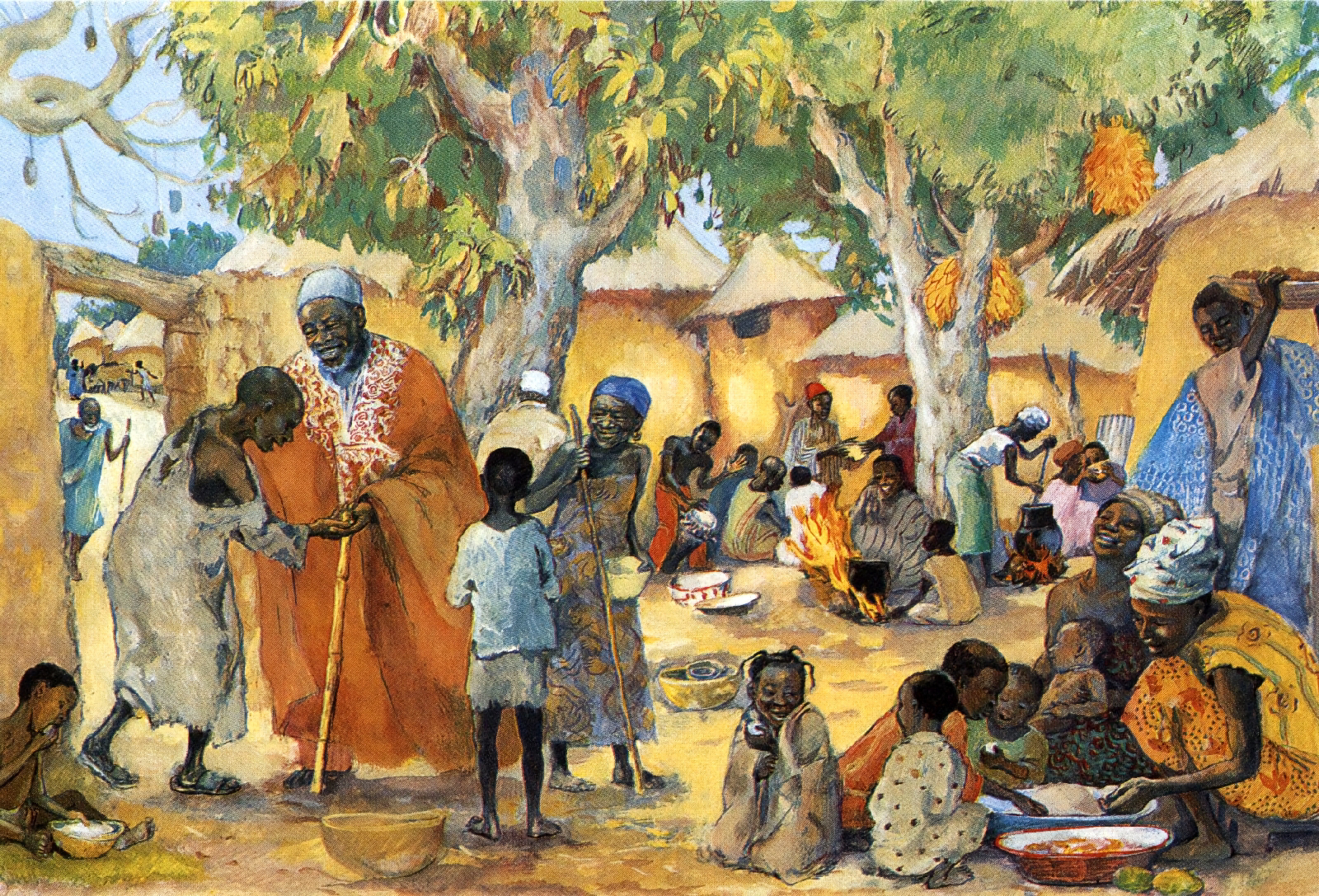
*art, "The Poor invited to the Feast," JESUS MAFA 1973 (from the vanderbilt divinity library digital archives).


.png)


.jpg)

