Thursday, November 24, 2022

JUDGMENT DAY

The Season of Advent has begun and many expect a Christmas reading for Sunday. Matthew's passage is not. It's part of the Synoptic Gospels's mini Apocalypse (so, we find parallels in Mark and Luke). Scholars agree that the passage reflects traumatic memories from the Fall of Jerusalem around 70 CE.

A lot of people look forward to the End of Days or the Second Coming because it promises eternal rewards and punishment. Of course, there are millions of card-carrying Christians who expect that they will be rewarded, while so-called infidels--namely, anyone who has not accepted Jesus as their Personal Savior and Lord--will be punished. The "saved" will be taken away while the "damned" will be left behind.

Many others look forward to the day that God will make things right, especially for those who have been dispossessed, displaced, disenfranchised, discriminated, and dehumanized by prejudice, greed, injustice, and evil.

There are also those who dread the End of Days or the Second Coming because they know they have failed to do what Jesus, in his First Coming, commanded them to do: preach Good News to the Poor, feed the hungry, give drink to the thirsty, take care of the sick, visit the prisoners, clothe the naked, and welcome the stranger.

Judgment Day will come. Nobody knows which day or which hour, but it will happen. Like in the days of Noah. God's Day of Justice is coming. Jesus said so.

And it might come today.

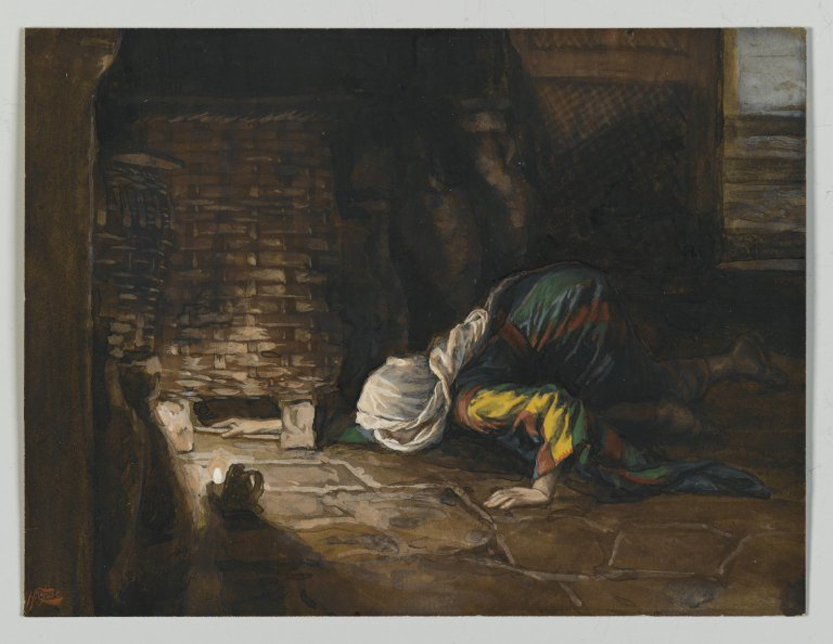
*art, "Two Women at the Mill," (James Tissot, 1836-1902) from the vanderbilt divinity library digital archives.

Friday, November 18, 2022

REMEMBER ME

Sunday's lection is part of the church's tradition about Jesus's last words on the cross. You find one statement in Matthew; one in Mark; three in John; and three in Luke. Sunday's Lukan passage is also the basis of Jacques Berthier's famous 1978 Taize hymn, "Jesus, Remember Me."

Social scientists tell us the worst punishment for Filipinos is solitary confinement. Many Filipinos turn on radios and televisions when they are alone, not to listen or watch, but simply to create a semblance of community. God did not create us to be alone. No one deserves to be alone. Worse, no one deserves to be forgotten.

This was the plea of the man who was crucified with Jesus: Remember me. We often forget that many people do not fear death. What they really fear is oblivion; that they will be forgotten; that no one will remember them.

God's gift of grace creates communities. And these communities of grace are founded on a shared commitment to memory and remembrance. God does not want anyone to be alone. God does not want anyone to be forgotten. You and I, as followers of Jesus are challenged to race against erasure and to dedicate our lives to celebration, to commemoration, to ritualization.

And to always remember.


*art, "Dismas," (Thomas Puryear Mims, 1906-1975), at the Benton Chapel (Vanderbilt University). Tradition names the repentant man crucified with Jesus as Dismas or Dismus.

Friday, November 11, 2022

NOT ONE STONE WILL BE LEFT

Sunday's lection reminds us of Herod the Great's Temple that, according to Jesus, was built from the offerings of widows and other very poor people.

Jesus said, "Not one stone will be left here upon another; all will be thrown down!" And he was right.
We are uncomfortable with a Jesus who speaks of doom, destruction, and death. We do not wish to see Jesus brandishing a whip while driving out those who were selling and buying in the Temple, including the moneychangers. We do not want to acknowledge that Jesus can be angry.
We are so used to the Jesus we have created in our image. We are so used to the huge cathedrals and grand buildings we have created to make us comfortable when we come together in his name. We have even come up with the phrase "Sunday best", air conditioning, and exclusive seating inside these walls we have built as imposing monuments of our faith in God. Remember Jesus’s words, "Not one stone will be left here upon another; all will be thrown down."
Friends, our comforts have made us forget that the church is not a building. It never was. It never will be. It has always been people: people who love; people who serve; people who offer their lives so that others may live, like Jesus did.
And when the church ceases to serve its purpose, we should not be surprised when Jesus himself tears it down.
*photo, The Western or "Wailing Wall" in the Old City of Jerusalem (taken in August 2016).

Thursday, November 03, 2022

THE ASSOCIATE PASTOR


Katharine Doob Sakenfeld, one of my teachers at Princeton, shared this story with me. It resonates with Sunday's lection.

Now there were seven brothers who were all pastors. The first served as Administrative Pastor in a big church. A woman pastor served as Associate Pastor. The first brother died so the church appointed the second brother as Administrative Pastor. The woman remained Associate Pastor. The second brother died so the church appointed the third brother to take over. The woman remained Associate Pastor. The third brother died as well, and so in the same manner, all the brothers died. All were appointed Administrative Pastor. And the woman remained Associate Pastor.

Finally, the woman also died. In the resurrection, which brother will she work with as Associate Pastor?

*art, "Seven is Enough!," from the Cartoon Gospels (The-Cartoonist)

Thursday, October 27, 2022

ZACCHAEUS'S EXAMPLE

In the Gospel of Luke, we have “enemies who love": those who actually serve the least, who actually take the side of those whose only hope is God, who completely subvert expectations.


If we read our Bibles and pray everyday, then we will grow, grow, and grow in the realization that over and over in the New Testament, we are reminded how the people hated the Romans, the Samaritans, and tax collectors. But in Luke, the Roman Centurion, the Samaritan on the road connecting Jerusalem to Jericho, and Zacchaeus, the chief tax collector, are presented as models of faith. They are "enemies who love."

The Centurion not only loved the Jewish people and built their synagogue, he also loved his slave dearly and sought help from the Jewish community when the latter was ill and close to death. We all know about the Samaritan who was a neighbor to the Jew who fell into the hands of robbers.

Then, there is Zacchaeus in Sunday's lection. There are two important things in the passage that many English versions do not emphasize. Scholars have been raising these points for a long time.

First, he was young, not short. And he was a very young but very rich chief tax collector, not just your regular hated publican. The passage tells us how the people ostracized him. For them, he definitely did not belong. For them, he, most definitely, was not a child of Abraham.

Second. The verbs in verse 8 are in the present tense. Even present progressive. Not future. Zacchaeus did not promise to give back half of his possessions to the poor. He did not promise to pay back those he has defrauded four times as much. HE WAS ALREADY DOING BOTH! He was already doing acts of justice which Jesus commanded the rich to do in order to enter the Kingdom of God.

For Jesus, Zacchaeus was, most definitely, a child of Abraham!

Friends, many times we love playing God. We decide who are in and who are not. We decide who are saved and who are doomed. Salvation is God's gift. It is not ours to give.


*art, "Zacchaeus welcomes Jesus," JESUS MAFA, 1973 (from the vanderbilt divinity library digital archives).

Thursday, October 20, 2022

THE PHARISEE AND THE PUBLICAN

Pharisees loved God and country, were very religious, highly trained, upright, and totally against the Roman Occupation of Palestine. They were loved by the masses in contrast to the elitist Sadducees who belonged to the ruling class. Let us not forget that Paul, Nicodemus, Joseph of Arimathea, and Gamaliel were Pharisees.


In Sunday's lection, the Pharisee was telling the truth. Everything he said in his prayer was true.

Publicans or tax collectors were probably the most hated people during Jesus’s time. They worked for Rome and were considered collaborators and traitors.

In Sunday's lection, everything the tax collector said in his prayer was also true.

Both men were truthful. What's the difference?

The tax collector judged himself and found himself needing God's mercy. The pharisee judged the tax collector and found the tax collector needing God's mercy.

Then and now, we all need God's mercy. Especially those of us who, like the pharisee, think we don't.

*art, "The Pharisee and the Publican," JESUS MAFA, 1973 (from the vanderbilt divinity library digital archives)

Thursday, October 13, 2022

THE WIDOW AND THE UNJUST JUDGE

This Sunday's lection is not about prayer. Most of the time we hear sermons that tell us that if we persist, like the widow, in prayer, pleading to God, then God, like the judge, will relent.


Stop imagining that the judge in the story is God. He is not. He is a judge--an unjust judge, at that, like many in our country today. (There are exceptions, of course, like RTC Judge Marlo Magdoza-Malagar.)

And then there's the widow. Widows are among the three most dispossessed people in Bible times (along with orphans and strangers), pleading for justice like so many in our country today. The thousands of widows caused by Duterte's War on Drugs. Tens of thousands of widows brought about by militarization, by large-scale mining, by human trafficking, by the US-led War on Terror, by powers and principalities fueled by insatiable greed and lust for profit. All crying out, all relentless, all persistent in their quest for justice.

And the unjust judge relents. Not because he had a change of heart. The situation changed because the widow never gave up. Morning, noon, and night. Rain or shine. She was in his face. Standing her ground. She never lost hope. She wore him down. She fought for justice and justice prevails at the end.

Friends, justice must alway prevail. This is why we should always choose justice.

*art, "Unjust Judge and the Importunate Widow," John Everett Millais (1829-1896), from the vanderbilt divinity library digital archives.

Thursday, October 06, 2022

KRISTER STENDAHL AND THE NINE LEPERS

During my first year of graduate school, I had the privilege of presenting a paper at the Society of Biblical Literature's annual meeting in Orlando, Florida. I did not expect Krister Stendahl* to be in the audience--he was in the front row. I did not expect him to come up the stage after the presentation and introduce himself to me--he did.


I did not expect him to remember me when we saw each other again in the following year's SBL meeting in Boston--he did remember me. He even remembered my paper, and asked if he could join me for lunch. Those very priceless moments with Bishop Stendahl seem surreal to this day.

He was interested in my argument that faith being a response to grace resonated with "utang na loob" being a response to "kagandahang loob". And that the best way to respond to grace by faith is to to pay it forward. The best way to love God, our Parent, is to love our sisters and brothers. I used the story of the ten lepers to unpack the concept. And the narrative is Sunday's lection.

We expected the ten lepers who were healed to go back to Jesus to express their gratitude. But only one returned to do so. And most of our interpretations have celebrated this one who returned. How about the "ungrateful" nine? Is it not possible that they paid it forward? Is it not better if an act of kindness is repaid by doing an act of kindness to someone else instead of returning the favor?

Isn't serving the people--especially widows, orphans, and strangers--the greatest expression of our gratitude for God's grace?

=========================
*Krister Stendahl (1921-2008) was Bishop of Stockholm (Sweden), theologian, and New Testament scholar. He served as professor and dean of the Harvard Divinity School. His works on Paul are required reading in many seminaries.

+art, "The Healing of the Ten Lepers," JESUS MAFA, 1973 (from the vanderbilt divinity library digital archives).

Friday, September 30, 2022

THE RACE AGAINST ERASURE


I am sure most of us have heard sermons about moving mountains (Mark 11. 22-23, Matthew 21: 20-22) or uprooting trees (Luke 17: 5-6) with our mustard seed-sized faith.

Sycamore-Mulberry trees have deep and wide root systems that are invasive and damaging to the soil system. These roots cause problems to other plants.

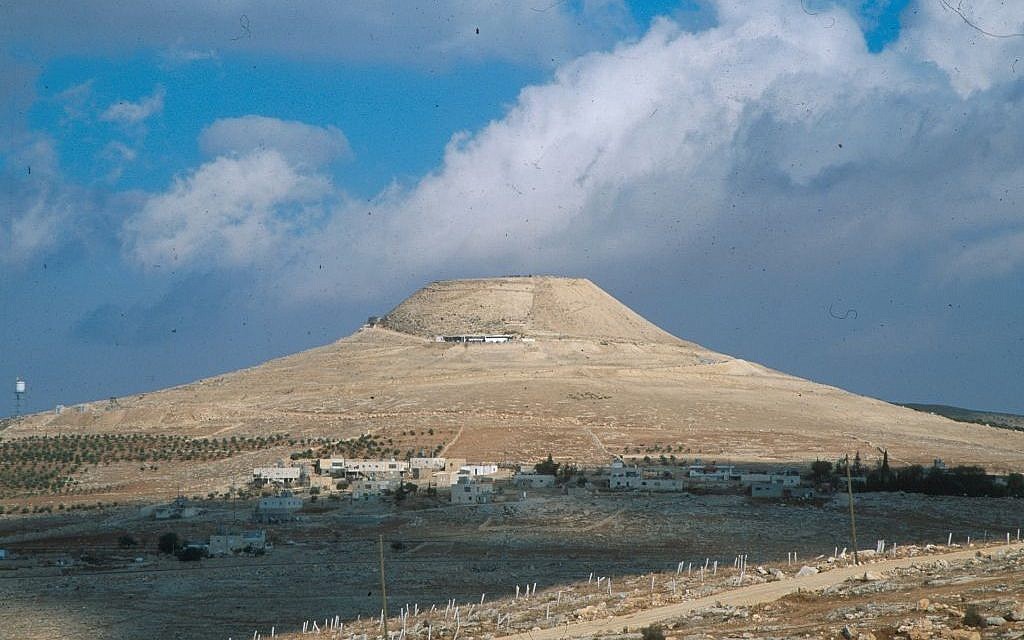
Historians offer information on two possible mountains Jesus may have been referring to: The Temple Mount and Herod the Great's Herodium.

Herod was called the Great Master Builder and was responsible for the man-made harbor at Caesarea Maritima, the fortress at Masada, the magnificent Temple Mount, and the Herodium (his palace and burial site). Herod, through forced labor and heavy taxation, literally moved mountains to build the last two monuments to his greatness.

It's hard to imagine a tiny mustard seed winning against a huge Sycamore-Mulberry tree, but I would like to believe that Jesus was challenging his listeners that it can be done--because it had been done. David brought down Goliath with one stone to the head.

Whether Jesus was talking about the Temple Mount or the Herodium, I would like to believe that he was challenging his listeners to have the faith that any man-made mountain that is built on exploitation, dehumanization, and oppression can be brought down, and thrown into the sea....

If we work together.

These days, huge man-made mountains and deeply rooted trees of prejudice, discrimination, homophobia, demonization, dehumanization, comodification, patriarchy, imperialism, and injustice reign in our world.

Fake news, misinformation, disinformation, disenfranchisement, red-tagging, and character assassination serve as the ruling classes' primary tools in its grand project of erasing dissent, resistance, and works of genuine transformation.

The race against erasure is now. It can be done. It had been done. David brought down Goliath with one stone to the head.

*image is from the "times of israel" (herodium/herods-mountain-hideaway)

Thursday, September 22, 2022

LAZARUS AND THE RICH MAN

Scholars tell us of two ancient stories that resonate with Sunday's lection. One is Egyptian, the other rabbinical. The former is about the reversal of fortunes in the afterlife. The latter was about Abraham's servant Eleazar (Lazarus in Greek) who walked the earth in disguise to check on Abraham's children's observance of God's command to care for the poor, especially orphans, widows, and strangers.


In Jesus's version, Lazarus wasn't in disguise. He was so poor, sick, and starving that his plight was described by Abraham as evil. He was in such a dehumanizing state that his company was street dogs. He died alone and was not even buried. Being buried is the last act of human decency that societies have practiced for millenia. Lazarus died and no one was around to bury him. God had to send angels to bring him to Abraham's bosom.

The rich man feasted every day. He also died. He was buried--I'm sure in grand fashion, with scores of professional crying ladies.

Today, the world spends more money on dog food than on basic health care or basic literacy programs for the most vulnerable communities. Today, 25,000 people starve to death daily while one country has enough resources to feed 40 billion people! (That's six times the population of the world.)

Today, Lazaruses abound outside our homes, our offices, and our places of worship: homeless, jobless, hopeless... Suffering alone! And we, like Cain, smugly assert, "Am I my brother's keeper?" We, like Senator Jinggoy Estrada, tell the victims and surivors of the evil Martial Law Regime, "What is there to apologize for? Move on na tayo." Unless we change, unless we repent, we will be in agony, tormented by flames in Hades. With the rich man. And with Jinggoy.

*art, "The Rich Man and Lazarus," JESUS MAFA, 1973, from the vanderbilt divinity library digital archives.

Thursday, September 15, 2022

THE DEBT MANAGER

Sunday's parable from Luke 16 has been interpreted so many different ways. Some work. Some do not, especially those that insist that the rich master is a metaphor for God.


The rich master is a rich master. Charges are brought against his debt manager or steward for dishonesty. Apparently, other debt managers want him out of the picture, thus the charges.

The manager--finding his position in jeopardy and knowing he cannot do manual labor and is ashamed to beg--does what most anyone would do in his situation: use the system of debts and indebtedness to his advantage. Find a way to make sure that he does not end up on the streets. He cuts his losses by literally cutting his commission.

What he does gets him his job back. His rich master commends him. And those in debt are now beholden, not just to the rich master, but also to the manager.

This is the way things actually work. This is the evil of debt, then and now. That is why the rich are still rich and continue to get richer. This is why the poor plea, "Forgive us our debts!" This is the way of empire. This is the economy of death.

This is the complete opposite of the Kin(g)dom of God.

*art, "Parable of the Unjust Steward," (2012), Andrei Mironov [from the vanderbilt divinity library digital archives]

Thursday, September 08, 2022

THE PARABLE OF THE LOST COIN

A few months after Nanay was laid to rest we went through her things. It was very hard. We choked up everytime we found the bills she kept. A fifty-peso (1 USD) bill here. A hundred-peso (2 USD) bill there. Inside a book. Tucked in a blouse pocket hanging in her closet. Folded in an old letter's envelope. Rolled up inside a bottle in the kitchen cupboard.


Like many Filipinos, our family lived from payday to payday and Nanay's "backup system," which so many use, helped keep us afloat.

This is why I love Sunday's Parable of the Lost Coin. The woman had ten coins. Each can buy a measure of wheat enough to feed one person. But only the rich could afford to eat wheat. The poor ate barley. Each of her coins can buy three measures of barley enough to feed three or four. Her ten coins were enough for her family to survive ten days on cheap bread.

And she misplaces one coin! So she searches for it like her family's life depended on it. Because it did. And when she finds the coin, she celebrates with friends and neighbors.

Of course there are people whose cupboards and refrigerators have provisions for weeks. Even months. Some have provisions that will last until The Second Coming!

Friends, many among us forget that for so many people who plea, "Give us today our daily bread," God's shalom is actually just one coin. Just enough money to buy the cheapest rice for one day. Just enough to survive for one more day!  


*art, "The Lost Drachma," James Tissot (1836-1902), from the vanderbilt divinity library digital archives

Thursday, September 01, 2022

THE COST OF DISCIPLESHIP

Sunday's lection from Luke reminds those of us who call ourselves Christian that following Jesus of Nazareth has never been--and will never be--a picnic nor a walk in the park. The cost of discipleship is very high. The cross that Jesus talks about does not refer to the challenge of being married to your spouse, nor the responsibility of taking care of elderly relatives, nor the burden of pastoring a metropolitan church, nor to any of the other metaphorical "crosses" we have come up with.


The cost of discipleship is very high. It's completing the tower. It's winning the battle. We don't go build without finishing. We don't wage war in order to lose.

Many among us want to go to heaven, but are afraid to die. Many among us want to be resurrected, but are afraid to be crucified. Many among us want to see a new day, but are afraid of the night. We cannot have one without the other.

My friends, we cannot trully follow Jesus unless we are ready to carry our cross. When Jesus calls us, he bids us, "come and die."

*art, "The Cost of Discipleship," from inductivebiblestudy app, 2020.