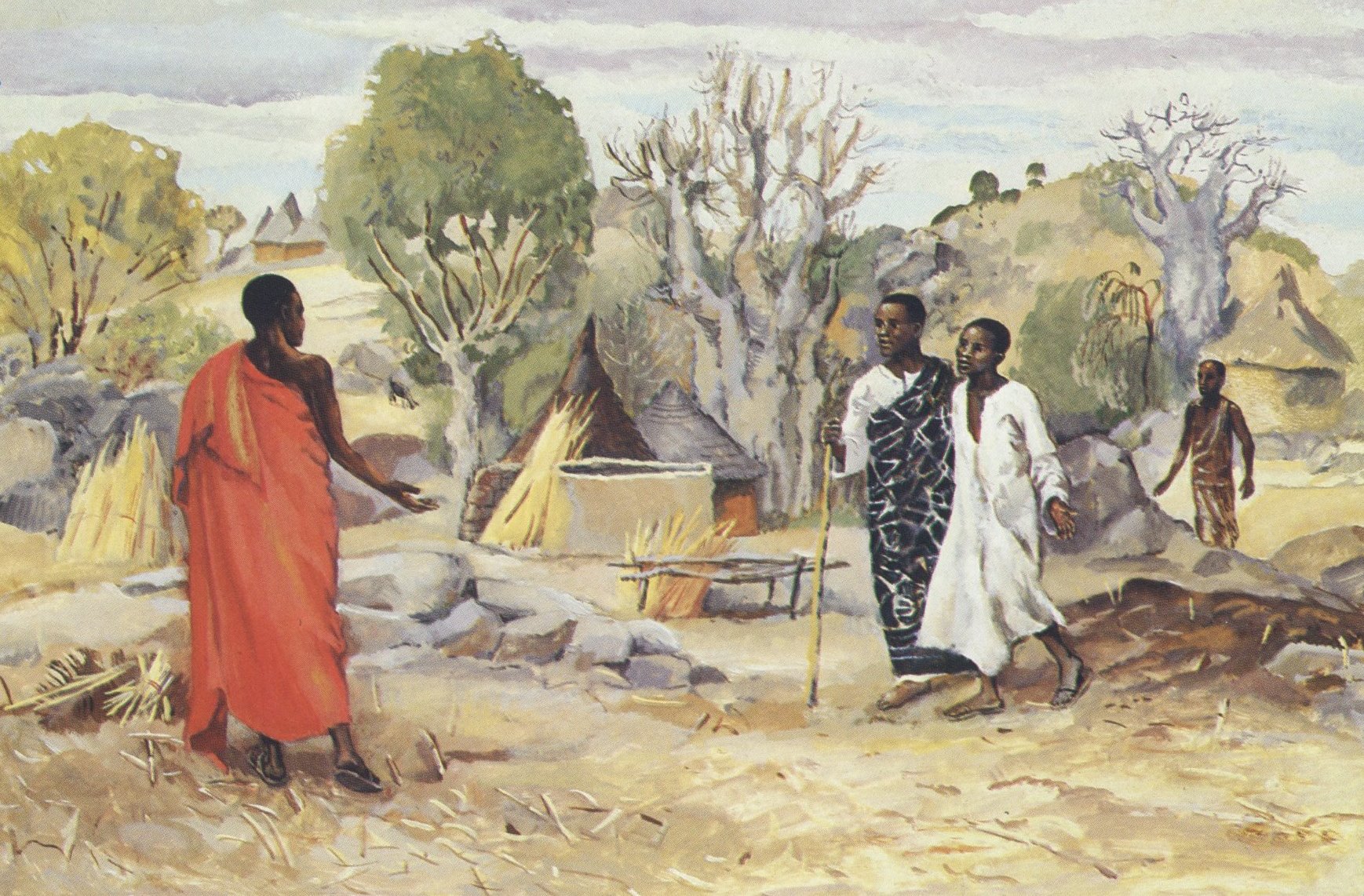
Sunday's lection describes Jesus making a whip to drive out those responsible for turning the Temple in Jerusalem into a marketplace. Historians tell us that Jesus entered the city with 5000 men and went straight for the temple which, by that time, had become the symbol of the conjugal dictatorship of the Romans and the Jerusalem-based political and religious elite. Pontius Plate, the Roman Governor, and Joseph Caiaphas, the High Priest, were bosom buddies. Both were responsible for the execution of Jesus. Both were responsible for the murder of so many others who were deemed "enemies of the state."
Both were removed from office around 36 CE. Josephus described Caiaphas as "heartless" while Philo characterized Pilate's tenure as one of "ceaseless cruelty".
As long as there are heartless and cruel people who wield power, the murder of innocents and the massacre of defenseless peoples will continue. As long as there are heartless and cruel people who think that women and children are objects, that people are commodities, and that the Bible is a land title* the culture of impunity will continue. As long as there are heartless and cruel people enthroned and sustained by empire, patronage politics, and insatiable greed, the killings will not stop.
Dear Friends, the heartless and the cruel will not stop. In order for the killings to stop, in order for this culture of impunity to end, we need to stop the heartless and the cruel: Netanyahu, Biden, Trump, Marcos, and their ilk ... Now! We also need to dismantle the systems, the structures, and the culture that breed them.
* "The Bible is not a land title" is a quote from Prof. Atalia Omer.
+art, "Jesus drives out the merchants", JESUS MAFA 1973, Cameroon (from the Vanderbilt Divinity Library art collection).
READING THE BIBLE INSIDE A JEEPNEY: Celebrating Colonized and Occupied Peoples' capacity to beat swords into plowshares; to transform weapons of mass destruction into instruments of mass celebration; mortar shells into church bells, teargas canisters to flowerpots; rifle barrels into flutes; U.S. Military Army Jeeps into Filipino Mass Transport Jeepneys.
Thursday, February 29, 2024
Thursday, February 22, 2024
SATAN DOES NOT WANT US TO SUFFER
Many among us grew up with images of and ideas about Satan that do not actually come from the Bible. Most of us grew up with this idea that Satan is a hideous monster, with a tail, horns, and a pitchfork. Many among us believe that Satan is God's equal. We blame Satan for things that go bad or wrong in our lives and thank God for the opposite. It's like God and Satan are playing chess, and we're mere chess pieces on the board we call life.
In the book of Job, Satan is with other heavenly beings in the presence of God. In the book of Zechariah, there is a vision of God with Satan to God's right. In Mark, Jesus was in the wilderness for 40 days and nights. He was not alone--he was with Satan. In 1 Chronicles 21, the anger of the LORD is described as Satan. In Numbers 22, the use of the Hebrew term "satan" actually means blocking one's way forward. (This is why Netflix's Lucifer and The Sandman are a must-see if you have access.)
In Sunday's lection Jesus calls Peter Satan. Why??? This is Peter, the leader of the disciples. Peter, whose house in Capernaum served as Jesus's home. Peter, the Rock. Peter is probably Jesus's most loyal disciple. Peter is probably Jesus's closest friend. Among the disciples, Peter probably loved Jesus the most. Thus, he did not want him to suffer, to be rejected, and to be killed. Peter thought Jesus was making a big mistake by going to Jerusalem.
Jesus calls Peter Satan. Why? Peter was in the way, in front of Jesus. Jesus tells him to get behind him, to get out of his way. Peter was wrong!
My friends, never, ever, forget this. Satan does not have horns, a tail, and a pitchfork. Many times in our lives, the adversary is not the enemy. Many times, the one who opposes or blocks our decision, our mission, or our advocacy is a loved one. Family. Parents. Spouses. Children. Friends. Even a best friend. Like Peter.
Why, you ask? Because they love us. Because they think we are making a mistake. Because they want what they believe is best for our well-being. Because they do not want us to undergo great suffering. Because they do not want us to be killed. They behave like Peter.
Every day people decide to follow Jesus, to demand for a ceasefire in Gaza and stand with the Palestinian People, to fight against tyranny and dictatorships, to work for peace based on justice, to proclaim good news to the poor and liberation to the oppressed.
And every day, people who love, people who care, people who do not want their beloved to suffer, to be rejected, to die, or to experience hell on earth, do as Peter did. They rebuke their loved ones because they think they're making a big mistake. They stand in the way.
Like Peter, they become Satan. Like Jesus, we need to rebuke them and continue on the path that God has called us to tread. Let us never forget, Peter eventually takes the path Jesus did. Offering his life so that others may live.
*art, "Get Thee Behind Me, Satan" by James Tissot, 1836-1902 (from the Vanderbilt Divinily Library digital archives).
Thursday, February 15, 2024
JESUS WAS NOT ALONE
On Sunday's lection from Mark, the heavens are torn or ripped apart during Jesus's baptism. In Matthew and Luke they are opened. A stark contrast. The Spirit then drives Jesus into the wilderness in Mark. In Luke and Matthew, the Spirit leads Jesus. Being driven and being led are very different descriptions. The former conjures an image of Jesus going with hesitation, even reluctance. The latter paints a picture of readiness and willingness.
Wilderness conjures up a lot of ambivalent images for us who study scripture. God appeared to a hardheaded Moses through the burning bush in the wilderness. The Israelites wandered almost aimlessly in the wilderness for decades. Many of them died there, including Moses. John the Baptist was a "voice of one calling in the wilderness." The wilderness does not seem like a very hospitable place. Yet, God's surprises abound in the wilderness!
Jesus spent 40 days in the wilderness. Matthew and Luke add that he fasted. This narrative is the basis for the 40 days of Lent.
Many among us imagine that Jesus was alone in the wilderness during those 40 days. He was not. Jesus had company. Wild beasts. Angels... and Satan. Non-human life. God's surprises do abound in the wilderness!
My friends, let us never forget. Satan did not betray Jesus. Judas did. Satan did not deny Jesus. Peter did. Satan did not plot to arrest and kill Jesus in secret. The chief priests and scribes did. Satan did not abduct, torture, and murder Jesus. The Romans did.
Satan is not behind world hunger, monopoly capitalism, Islamophobia, nor homophobia. Satan is not behind the genocide ongoing in Gaza, nor is he the architect of the dehumanization of the Palestinian People. We all know who are responsible and should be held accountable for all these.
Lent began last Wednesday. Who among us will spend 40 days in the wilderness with non-human beings? Jesus did. God's surprises await us there!
*art, "Jesus is Tempted," (JESUS MAFA, 1973, Cameroon) from Vanderbilt Divinity Library digital archives
Thursday, February 08, 2024
METAMORPHOSIS
Moses, Elijah, and Jesus all experience mountain-top encounters with God. All three went through very trying and challenging times in their lives and their encounter with God enabled them to complete the tasks that God has called them to do. The three went up caterpillars, they came down butterflies.Transfiguration. The original word, transliterated, is metamorphosis.
Not everyone who encounters God come back as butterflies. Take Peter. In the mountain Peter experienced something so special, so unique that we expected him to come out as a butterfly. He does not. He opposes Jesus’s journey to Jerusalem. He eventually denies Jesus.
Everyone who encounters God in God’s mountain needs to come down. When Moses came down he led in the birthing of a people whose love for Yahweh was expressed in love for neighbor, especially the poor, the orphans, the widows, and the strangers. When Elijah came down he continued the struggle against Israel’s oppressive kings and began a prophetic tradition that ended with John the Baptizer. When Jesus came down he followed the path that led to Jerusalem, to the cross, and, eventually, to the empty tomb!
Metamorphosis.
My friends, to believe in metamorphosis is to believe in God's power to raise Gaza up from the rubble, in God’s power to bring down empires, in God's power to transform caterpillars into butterflies. Yes, eventually even Peter. And, yes, even you and me.
To believe in metamorphosis is to believe that goodness will always triumph over evil, that hope is stronger than despair, that faith conquers fear, that love is always greater than indifference, and that life will always, always, conquer death!
*art, "Transfiguration" (2008) by Mary Jane Miller (taken from her book "Life in Christ 2021, Knowledge of God made visible in Jesus the Man"). Image from the vanderbilt divinity library digital archives.
Not everyone who encounters God come back as butterflies. Take Peter. In the mountain Peter experienced something so special, so unique that we expected him to come out as a butterfly. He does not. He opposes Jesus’s journey to Jerusalem. He eventually denies Jesus.
Everyone who encounters God in God’s mountain needs to come down. When Moses came down he led in the birthing of a people whose love for Yahweh was expressed in love for neighbor, especially the poor, the orphans, the widows, and the strangers. When Elijah came down he continued the struggle against Israel’s oppressive kings and began a prophetic tradition that ended with John the Baptizer. When Jesus came down he followed the path that led to Jerusalem, to the cross, and, eventually, to the empty tomb!
Metamorphosis.
My friends, to believe in metamorphosis is to believe in God's power to raise Gaza up from the rubble, in God’s power to bring down empires, in God's power to transform caterpillars into butterflies. Yes, eventually even Peter. And, yes, even you and me.
To believe in metamorphosis is to believe that goodness will always triumph over evil, that hope is stronger than despair, that faith conquers fear, that love is always greater than indifference, and that life will always, always, conquer death!
*art, "Transfiguration" (2008) by Mary Jane Miller (taken from her book "Life in Christ 2021, Knowledge of God made visible in Jesus the Man"). Image from the vanderbilt divinity library digital archives.
Thursday, February 01, 2024
COMING OUT
Coming out is an important theme in the Gospel of Mark. If "Immanuel" can serve as bookends for Matthew (since this is the promise both in chapters 1 and 28), "Coming Out" frames Mark (in chapters 1 and 16).
The heavens are torn apart in the beginning of Mark, and the Spirit comes out. It stays out, and it is still out. Jesus goes all over the towns and villages of Palestine and commands unclean spirits to come out of the people they have occupied and possessed. The disciples at the end of Mark expected Jesus to be dead inside a box, a tomb, but he was not. He came out. He is risen. Jesus is never, ever, where we want him to be.
In Sunday's lection, the disciples and Simon Peter expected Jesus to be inside a box, Peter's house in Capernaum. But Jesus was not inside. No box can contain Jesus. He came out. Jesus is never, ever, where we want him to be.
No box can contain Jesus. Not then, not now, and not ever.
Right now, he is loose among the poorest, the most oppressed, the most marginalized, and the most demonized communities. Jesus is where most of us don't want him to be; where most of us do not want to be; where most of us are afraid to be.
He is in Gaza, he is among people living with HIV and AIDS, he is among sinners...
Jesus is waiting for us to come out of the boxes that keep us safe, indifferent, isolated, and insulated. He is waiting for us to come out of the boxes we have created to keep everyone in. Yes, even Jesus.
He is waiting for us to come out and join him.
*art, "Christ healing Peter's Mother-in-Law," (Rembrandt Harmenszoon van Rijn, 1606-1669), from vanderbilt divinily library digital archives.
Thursday, January 25, 2024
THE EXORCIST
Savior. Lord. Friend. Healer. Messiah. These are the more popular terms we use to describe Jesus. "Exorcist" usually does not come up in the list.
Sunday's lection from Mark offers us a glimpse of Jesus as an exorcist. Exorcisms make up a significant portion of Jesus's ministry in Mark, in Matthew, and in Luke. In John, on the other hand, Jesus is accused of being demon-possessed.
In Antiquity, a lot of illnesses, unusual or deviant behavior, and unbelievable feats of human strength were ascribed to spirits. It was a common belief that these spirits could take possession of people, which resulted in physical or mental affliction. That these spirits were unclean, even evil, was a later development.
In Mark, these unclean spirits know who Jesus really is: The Holy One of God. Only in Mark do we find one explicit identification of these unclean spirits with Rome: Legion (in 5.9). A Legion was composed of six thousand soldiers and the Roman Empire had about 30 legions deployed all over its territories.
Do not forget this. Ever. The worst kind of possession is imperialism. True then, true now. The worst kind of possession is when the colonizer has "possessed" or "occupied" the colonized's heart; when the colonized speak the colonizer's tongues, reproduce the colonizer's ideology, worship the colonizer's gods, and fight the colonizer's wars.
The silence and indifference of most of the "Christian World," who confess to follow the Palestinian Jesus, on the ongoing genocide against Palestinians is proof of this continuing imperial possession.
My friends, we need an exorcism. Right now!
*art, "The Possessed" (JESUS MAFA) from vanderbilt divinity library digital archives.
Thursday, January 18, 2024
GO FISH!
I am pretty sure that many among us used to sing a song that went, "I will make you fishers of men, fishers of men, fishers of men. I will make you fishers of men if you follow me." I haven't heard this song sung in years. Probably because we have stopped fishing for people.
Why is that? We have stopped FOLLOWING JESUS.
What have we done instead? We praise Jesus. We worship Jesus. We proclaim, "Christ above all!" We do everything in our power to make other people look like us; pray like us; act like us. We have stopped doing what Jesus actually told us to do in order to fish for people. FOLLOW HIM!
Why is that? Because following Jesus is hard. It is dangerous. It means loving our neighbor, including our enemies. It means taking up the cross. It means going against empire. It means being red-tagged, vilified, and demonized. It means being crucified. It means offering one's life as a ransom for many.
*image, "St. Peter and St. Andrerw," by Peter Koenig (from the vanderbilt divinity library digital archives)
Thursday, January 11, 2024
COME AND SEE!
No king, no prophet, no priest ever came from Nazareth. Maybe this is why Luke and Matthew came up with Bethlehem birth stories. And the 'Joseph-from-the-house-of-David-was-the-father' tradition as well. And, of course, the demigod mythology. Mark's 'The carpenter from Nazareth, the son of Mary' (read: bastard) was a hard sell.
Yet to this day, the Nazarene who lived his life with and for those whose only hope was God-- who preached good news to the poor, who challenged the rich to sell everything they have and give the proceeds to the destitute, who defied empire and its life-negating systems, and who commanded everyone who followed him to offer one's life for a friend--his way of life remains a very hard sell.
Can't exactly sell a way of life that carries a high risk of being executed by the state, can you?
Can anything good come out of Nazareth? Can anything good come out of Gaza? Can anything good come out of Palestine? Philip's answer to Nathanael is as true today as it was then. COME AND SEE!
But these days, before we can go and see, we need to make sure that a permanent ceasefire is declared. We also need to make sure that the State of Israel and its allies led by the United States of America are held accountable for the evil they have unleashed on the Palestinian People.
My friends, today and tomorrow (January 11 and 12) at 10am (in Palestine and South Africa) the United Nation's International Court of Justice will hold public hearings on the case of genocide filed by South Africa against the State of Israel. Everyone dedicated to peace based on justice is enjoined to join the global Cyber Intifada on all social platforms (Twitter/X, Facebook, Instagram, TikTok, etc.) to share videos, pictures, statements, and other forms of evidence to demonstrate Israel's ongoing genocide against the Palestinian People.
We must all use the hashtag #EndIsraelsGenocide and post at the same time (10am in Palestine and South Africa, 4pm in the Philippines) and keep the campaign going for two hours. Today and tomorrow!
#EndIsraelsGenocide
#CeaseFireNow
#FreePalestine
*art, "The First Two Disciples" (JESUS MAFA), from Vanderbilt Divinity Library archives.
Thursday, January 04, 2024
THE HEAVENS WERE TORN APART
Sunday's lection from Mark talks about the baptism of Jesus by John. Matthew and Luke have parallel versions. Only Mark reports that the heavens were torn or ripped apart when the Spirit descended upon Jesus. There are so many people who are fixated on going up to heaven. There are those who do most of what they do in order to secure themselves a place up in heaven. There are also those who believe that investing their 70 to 80 earth years on "heavenly" endeavors--putting numerous bills in the offertory, donating land, and building air-conditioned churches--will get them a reward in the after-life that spans eternity.
Now, there are those who read their Bibles, pray everyday, and grow, grow, grow in the realization that many times in scripture, God does everything possible to live among God's people here on earth whether it is God descending on Sinai, journeying with the Israelites via the tabernacle, taking residence at the temple in Jerusalem, and fulfilling the promise of "Immanuel." Of course, our lection says that the Spirit descended, came down, like a dove. I would like to believe that the Spirit tore or ripped the heavens apart because the Spirit could not wait to leave heaven for earth.
And, do not forget this, ever: the Spirit that came down has not gone back up to heaven. And Jesus likewise. He is still down here on earth, particularly in places and spaces where we do not want him to be; in places and spaces where we are afraid to go; in places and spaces like Gaza, the West Bank, and Mindanao, "The Land of Promise".
Now, there are those who read their Bibles, pray everyday, and grow, grow, grow in the realization that many times in scripture, God does everything possible to live among God's people here on earth whether it is God descending on Sinai, journeying with the Israelites via the tabernacle, taking residence at the temple in Jerusalem, and fulfilling the promise of "Immanuel." Of course, our lection says that the Spirit descended, came down, like a dove. I would like to believe that the Spirit tore or ripped the heavens apart because the Spirit could not wait to leave heaven for earth.
And, do not forget this, ever: the Spirit that came down has not gone back up to heaven. And Jesus likewise. He is still down here on earth, particularly in places and spaces where we do not want him to be; in places and spaces where we are afraid to go; in places and spaces like Gaza, the West Bank, and Mindanao, "The Land of Promise".
He is waiting for us to join him as he works among the poor, the oppressed, the marginalized, the dehumanized, the occupied, and the silenced. Right now.
*art, "John baptizes Jesus," JESUS MAFA, 1973 (Cameroon), from the vanderbilt divinity library digital archives. 🙏
Thursday, December 28, 2023
LIFE UNDER OCCUPATION
All four of my grandparents experienced World War II and its horrors. Both my grandfathers were soldiers. My grandfather, on my mother's side, was captured by the Japanese Occupation forces several times, and tortured every time. But nothing will compare to the pain, shame, and suffering that thousands of young women and girls went through as "Comfort Women" during that war. (Historians tell us that up to 400,000 were forced into sexual slavery from 1938-1945.)I can imagine that both Simeon and Anna were already alive at the beginning of the Roman Occupation of Palestine in 63 BCE--and both experienced its accompanying horrors. They were still under Occupation when the Baby Jesus was brought to the temple. I am sure that Palestinian friends and colleagues have relatives and friends who remember Palestine before 1948--before the current horrific Israeli Occupation, now on its 75th year.
When one has been scarred for years, even decades, of struggling against inhumanity, brutality, and insatiable greed, how does one go on? How does one hope in the midst of despair? How does one have faith in a world held captive by fear? How does one love when so much indifference exists? How does one live when death is but a heartbeat away?
Sunday's lection shows us that Simeon and Anna, who were both in their twilight years, looked to the future and saw God's life-sustaining acts in the midst of empire's death-dealing ways. They saw the future through an infant being dedicated to God. Empires create systems, structures, and walls that create strangers, that divide, that alienate, that pit one against the other, whether the division is based on class, race, creed, sex, gender, religion.
The birth of the Messiah, an infant whose name means "Yahweh saves," brings about the falling and rising of many. It brings complete strangers together. It births community! Communities birth accompaniment and solidarity and liberation. The birth of the Messiah, my dear friends, tears down walls. It has. It does. It will!
Yes, including Trump's Wall and the State of Israel's Apartheid Wall in Palestine.
*art from Vanderbilt Divinity Library. JESUS MAFA, 1973 (Cameroon) "Presentation of Jesus in the Temple."
TAKE ANOTHER ROAD
The Empire strikes back--always. In the case of the Magi, innocent children were massacred. And innocent children will continue to die as long as we try to save Baby Jesus from Herod. We should stop. He is not a baby anymore. He also does not need saving. The Magi did that already.
The Empire always strikes back. There are more Herods today. They are purveyors of war. Last year alone, over 2 trillion US dollars were spent on the arms industry. Over half a trillion more was spent in the illegal drug trade. The War on Terror and the War on Drugs have left a trail of suffering and death on the innocent. Over 20,000 people, mostly women and children, have been massacred by the Israeli Occupation Forces in Gaza and the West Bank using US-made arms and weapons of mass destruction.
Thus, you and I need to be wiser. We need to be Magi-er. We need to be more sensitive to the warnings in our shared dreams. We need to know when to beat swords into plowshares. And when to beat plowshares into swords. We need to take other roads.
We need to do all these to make sure that the massacre of the innocents in the Holy Land and elsewhere ends now! We need to make sure that the Herods and their ilk are made responsible. We need to act, wherever we are, right now!
["Scene of the Massacre of the Innocents," Leon Cogniet, 1824]
Thursday, December 21, 2023
MIRIAM AND MARY
There's something about Miriam we often overlook: we usually say she's Moses's sister. First and foremost, Miriam was a prophet. There's something about Mary we often overlook: we usually say she's Jesus's mother. Mary was also a prophet. There's something about Miriam and Mary we often overlook: both play major roles in the Bible's most important narratives, the Exodus and the Christ Events. We know their names come from the same root. That root is actually Egyptian and many scholars say it means "rebelling against a bitter system."
Mary's Magnificat is probably one of the most powerful prophetic passages in the New Testament. Mary, a young Palestinian woman, followed a God who scatters the proud in the thoughts of their hearts; who brings down the powerful from their thrones and lifts up the lowly; who fills the hungry with good things and sends the rich away empty.
This young Palestinian woman followed a God who takes sides, a God who takes the preferential option for the poor, a God who brings down kings and kingdoms, a God who weeps with those who weep and who cries with those who cry.
This young Palestinian woman is alive today. Yet the proud, the powerful, and the rich who pretend to venerate her fail to see her among the lowly and the hungry as they struggle against life-negating and death-dealing forces: in Gaza, among the Lumads of Mindanao, in Myanmar, and among Occupied Peoples. Moreover, the proud, the powerful, and the rich who pretend to venerate her tag so many who are working for "life in all its fullness" as enemies of the state, as terrorists, or as communists.
So, Jesus had John the Baptist as teacher. But before there was John, there was Mary: The Prophet. And she taught her son well. Very well indeed.
*image "The Annunciation. Gabriel and Mary." JESUS MAFA (Vanderbilt Divinity Library digital archives)
Thursday, December 14, 2023
THE GREAT I AM NOT!
There are a lot of people who think they are the messiah. A few have been in the Oval Office. Several have been in Malacanang Palace. Some are pastors and priests. Many are legends in their own minds. They believe that they are God's gift to the nations, institutions, and organizations they serve. They think they are indispensable, irreplaceable, and think that without them, all hell will break loose.
Our true calling, as followers of Jesus, is to bear witness to God's messiah and his liberating work. Just like John the Baptist. If Jesus is the Great "I am" then John is the Great "I am not." John proclaims, ""The one who is more powerful than I is coming after me; I am not worthy to stoop down and untie the thong of his sandals. I have baptized you with water; but he will baptize you with the Holy Spirit."
Yes, like John, we are not the messiah. We are called to bear witness to the messiah. And like John we are to do our witnessing in the wilderness. Not in the comfort and security of our own Jerusalems. Nor inside the four walls of our magnificent temples, imposing church buildings, and prestigious seminaries. Nor while we are seated in our living rooms chatting via "Zoom" with a digital Bible in one hand and an electronic newspaper in the other.
Wilderness conjures up a lot of ambivalent images for us who study scripture. God appeared to a hardheaded Moses through the burning bush in the wilderness. The Israelites wandered almost aimlessly in the wilderness for forty long years. Many of them died there, including Moses. Like John, the wilderness played a key role in Jesus' ministry. In Mark, the Spirit had to force Jesus into the wilderness after his baptism. There, Jesus had to deal with Satan. The wilderness does not seem like a very hospitable place.
Yet, we are called to bear witness in the wilderness: in places we do not want to go; to those desolate areas we fear, and be one with communities—poor and desperate—whom many call "God-forsaken."
We are called to proclaim the good news of the incarnation: that God has not forsaken; that God is not in heaven anymore; that God is here with us; that God is in Gaza, in the West Bank, and in every place where people struggle for life, for land, for dignity, and for peace based on justice.
John the Baptist was the voice of one crying in the wilderness. These days, we are more fortunate. We, you and I, are legion.
Our true calling, as followers of Jesus, is to bear witness to God's messiah and his liberating work. Just like John the Baptist. If Jesus is the Great "I am" then John is the Great "I am not." John proclaims, ""The one who is more powerful than I is coming after me; I am not worthy to stoop down and untie the thong of his sandals. I have baptized you with water; but he will baptize you with the Holy Spirit."
Yes, like John, we are not the messiah. We are called to bear witness to the messiah. And like John we are to do our witnessing in the wilderness. Not in the comfort and security of our own Jerusalems. Nor inside the four walls of our magnificent temples, imposing church buildings, and prestigious seminaries. Nor while we are seated in our living rooms chatting via "Zoom" with a digital Bible in one hand and an electronic newspaper in the other.
Wilderness conjures up a lot of ambivalent images for us who study scripture. God appeared to a hardheaded Moses through the burning bush in the wilderness. The Israelites wandered almost aimlessly in the wilderness for forty long years. Many of them died there, including Moses. Like John, the wilderness played a key role in Jesus' ministry. In Mark, the Spirit had to force Jesus into the wilderness after his baptism. There, Jesus had to deal with Satan. The wilderness does not seem like a very hospitable place.
Yet, we are called to bear witness in the wilderness: in places we do not want to go; to those desolate areas we fear, and be one with communities—poor and desperate—whom many call "God-forsaken."
We are called to proclaim the good news of the incarnation: that God has not forsaken; that God is not in heaven anymore; that God is here with us; that God is in Gaza, in the West Bank, and in every place where people struggle for life, for land, for dignity, and for peace based on justice.
John the Baptist was the voice of one crying in the wilderness. These days, we are more fortunate. We, you and I, are legion.
*art: "John the Baptist," fragment of a mosaic, from the Yorck Project 12th Century, Ayasofya Muzesi Building, Istanbul, Turkey (from the vanderbilt divinity library digital archives).
Subscribe to:
Comments (Atom)

.jpg)