Thursday, September 14, 2023

US$ 12 Billion!

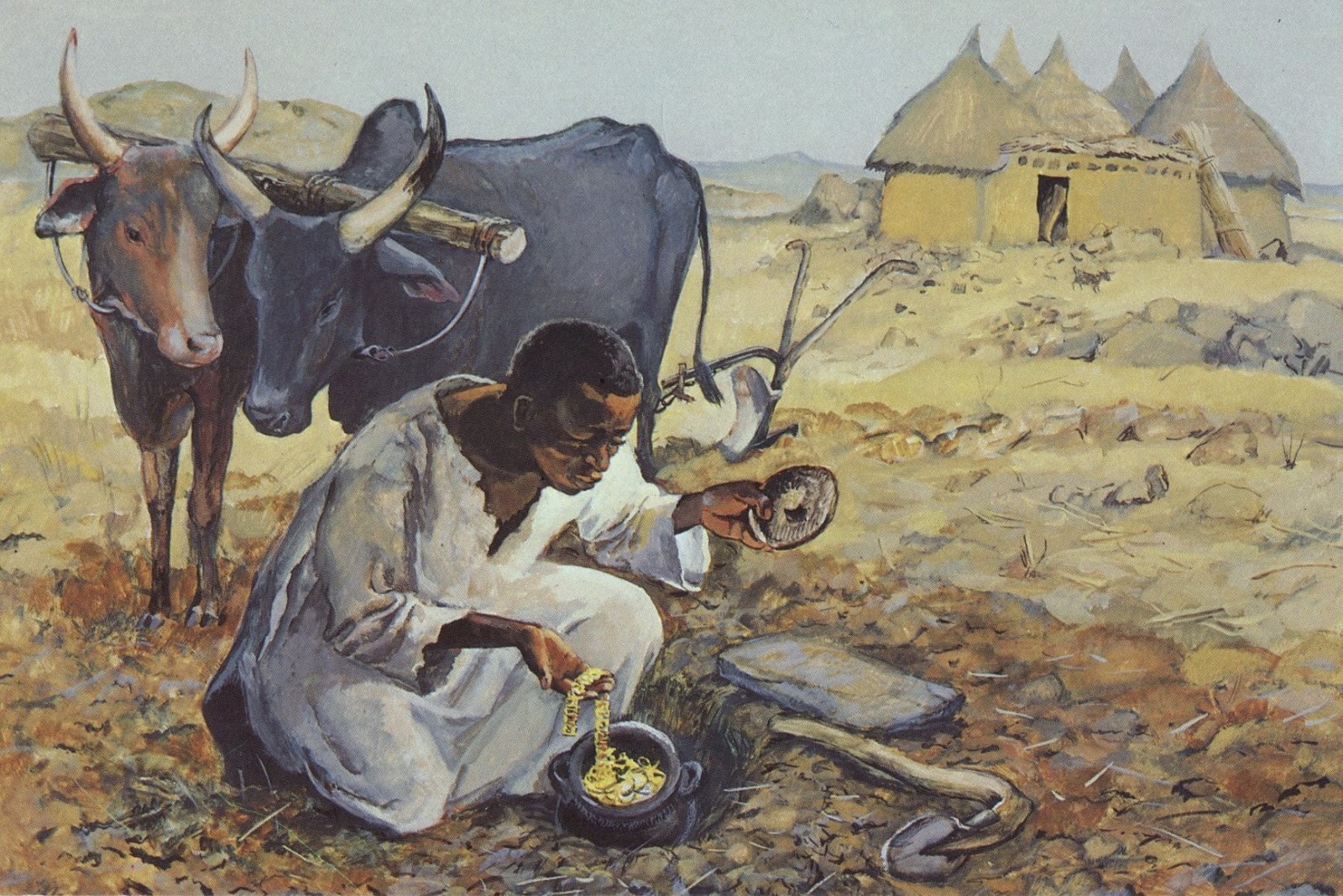
The Gospel of Matthew has parables of Jesus that talk about talents. Despite scores of sermons that tell us otherwise, these talents do not refer to gifts, skills, or competencies. During Jesus's time, a talent (talanton) referred to the largest unit of currency and was roughly equivalent to about 20 years of labor. The New International Version translates it correctly: talents were bags of gold! 

So, the 10,000 bags of gold in Sunday's lection was equivalent to 200,000 years of labor. Or about 12 billion US dollars! 

For me the key to making sense of the parable (outside of how Matthew uses the tradition) is the ten thousand talents! When Rome conquered Palestine in 63 BCE, the taxes the empire exacted from its colony was that exact amount. (See Josephus, Antiquities, 14.78)  By the time of Jesus, Palestine had been under Roman Occupation for almost a hundred years. Half of the population were slowly starving to death. Exploitation was rampant and tax collectors were among the most hated in the land. And Rome executed up to 500 "enemies of the state" daily to remind everyone that defiance was unacceptable behavior.

So the king in the parable pardons a huge debt which was not really owed. Then and now the powerful have laws, ledgers, books, documents, and, yes, theologies that show and teach how much the powerless are indebted to them. And payment always requires more than what is owed.

And the servant whose supposed debt was canceled? He does exactly what the exploitative system has shaped him to do, be the face of the colonizer to the colonized. More often than not, the colonized never see the face of the colonizer--thet see only his agents who come from among the colonized. Then and now the colonizer remains benevolent. 

Read the parable again. The king comes out smelling like a newly-bathed baby. The colonized are portrayed as seeking the king's favor. And one of them is actually tortured on orders of the king. 

Do not forget this. Ever. The king in the parable is a king and served as a metaphor for the Roman Emperor. For Trump? I'd say, yes. For Duterte? Yes. For Marcos and his Junior? Yes again. For God? Never.

Thursday, September 07, 2023

WHERE TWO OR THREE

Taking care of the least is a major theme in Matthew’s Gospel. Chapter 18 is particularly focused on this theme.


Many times we forget that the people who are hurt, those who are harmed, those who are sinned against are “the children,” the “little ones,” and the “lost sheep” in our communities. And more often than not, when they get the courage to confront those who sinned against them, the latter do not listen.

Thus, Jesus’s command to bring one more or two. This makes "two or three". And maybe, the offender will listen. If this does not happen, then the command is to involve the whole faith community. Maybe, the offender will listen.

Three times in the passage, the offender is given the opportunity to listen. To repent. To make amends. Twice, the church is called to take the side of the offended. To bring about genuine transformation. To bind and to loose.

Not to play referee. Not to dispassionately take a "neutral" stance, letting the offender off the hook or, worse, punishing the offended. Many times we forget that Jesus always took the side of those whose only hope was God: the children, the little ones, and the lost sheep. Many times we forget that God-with-us is most present when two or three are gathered to take the side that Jesus always took.

So, let us take a stand. Let us be that second or third person that will make two or three... And more. Against hopelessness. Against injustice. Against discrimination. Against violence against women, children and the Othered. Against the culture of impunity that pervades our world.

*image from heartlightdotorg.

Thursday, August 31, 2023

SATAN DOES NOT WANT US TO SUFFER

Many among us grew up with images of and ideas about Satan that do not actually come from the Bible. Most of us grew up with this idea that Satan is a hideous monster, with a tail, horns, and a pitchfork. Many among us believe that Satan is God's equal. We blame Satan for things that go bad or wrong in our lives, and thank God for the opposite. It's like God and Satan are playing Chess, and we're pieces on the board we call life.


In the book of Job, Satan is with other heavenly beings in the presence of God. In the book of Zechariah, there is a vision of God with Satan to God's right. In Mark, Jesus was in the wilderness for 40 days and nights. He was not alone. He was with Satan. In 1 Chronicles 21, the anger of the LORD is described as Satan. In Numbers 22, the use of the Hebrew term "satan" actually means blocking one's way forward.

In Sunday's lection Jesus calls Peter Satan. Why?! This is Peter, the leader of the disciples: Peter, whose house in Capernaum served as Jesus's home; Peter, the Rock. Peter is probably Jesus's most loyal disciple. Peter is probably Jesus's closest friend. Among the disciples, Peter probably loved Jesus the most. Thus, he did not want him to suffer, to be rejected, and to be killed. Peter thought Jesus was making a big mistake by going to Jerusalem.

Jesus calls Peter Satan. Why? Peter was in the way, in front of Jesus. Jesus tells him to get behind him, to get out of his way. Peter was wrong!

My friends, never, ever, forget this. Satan does not have horns, a tail, and a pitchfork. Many times in our lives, the adversary is not the enemy. Many times, the one who opposes or blocks our decision, our mission, or our advocacy is a loved one. Family. Parents. Spouses. Children. Friends--even a best friend. Like Peter.

Why, you ask? Because they love us. Because they think we are making a mistake. Because they want what they believe is best for our well-being. Because they do not want us to undergo great suffering. Because they do not want us to be killed. They behave like Peter.

Every day people decide to follow Jesus, to follow the path dedicated to the least, the lost, the last, and the left out, to fight against tyranny and dictatorships, to work for peace based on justice, to proclaim good news to the poor and liberation to the oppressed.

And every day, people who love, people who care, people who do not want their beloved to suffer, to be rejected, to die, or to experience hell on earth, do as Peter did. They rebuke their loved ones because they think they're making a big mistake. They stand in the way.

Like Peter, they become Satan. Like Jesus, we need to rebuke them and continue on the path that God has called us to tread.


*art, "Get Thee Behind Me, Satan!" by James Tissot (1836-1902), from the vanderbilt divinity library digital archives.

Thursday, August 24, 2023

WHO DO YOU SAY I AM?

Close your eyes. Imagine Jesus. Is he handsome? With piercing blue eyes? With beautiful shoulder length hair? White?

In Sundays lection, the most definitely nondescript, most probably brown eyed, unkempt, and Palestinian Jesus asked his followers, "Who do people say I am?"

How did they respond? John the Baptist, Elijah, Jeremiah, or one of the Prophets. Do we associate "prophet" with Jesus, like our Moslem sisters and brothers do? One of the oldest historical traditions in the Hebrew Bible is about another prophet, Miriam. But many of us do not associate prophet with her as well. Sister of Moses, yes. But prophet? No.

Close your eyes. Imagine Jesus. Not your Personal Lord and Savior. But Jesus, the Prophet. Like John, like Elijah, like Jeremiah, Huldah, Anna, and, yes, like Miriam... Is the Jesus we imagine immersed with the struggles of the Palestinian people? Is he part of the Black Lives Matter movement? Is he in solidarity with farmers struggling for genuine agrarian reform?

Is he still calling the rich among us to sell everything we have, to give the proceeds to the poor, and to follow him? Or have we been, all this time, following the wrong Jesus?


*art, based on the work of Tom McElligott for the Episcopal Ad Project. Updated 2018 by Rev. Emmy Kegler.

Thursday, August 17, 2023

WE ARE THE ANSWER TO OUR PRAYERS

We know Sunday's lection. It is the story of the mother who came to Jesus. Her daughter was sick. (The girl was probably twelve years old.) She begged Jesus for help. She was initially ignored. She was a Canaanite, a member of the peoples displaced and dispossessed by the Israelites, and Jesus treated her like a dog. Yet she persevered. And she persisted. And because she persevered, because she persisted, she changed Jesus’s mind. She got what she came for: her child was healed. Do not forget this. Ever. She was the "little bitch" who taught Jesus a lesson.


Like the mother who persisted and persevered, we are the answer to our prayers. We are the families split apart by forced migration. We are the parents whose children are dying from a virus worse than covid-19: hunger. We are the children whose parents are snatched away from us by the evil culture of impunity that pervades our land.

We are today's Canaanites, displaced, dispossessed, treated like dogs, those whose pleas are never, ever, heard. We are also the mothers who will do anything and everything for our children's welfare. We are also the fathers who will storm the gates of hell to get our children food, shelter, and education. We are the children whose outrage will break the silence of heaven. We will make sure that God hears our mourning, our anger, and our collective cries for justice.

We are the answer to our prayers! We are the change that we desperately need. We are the warm bodies who will help birth the future. And we have much to do, you and I, because tomorrow is already here.

Today is the tomorrow we helped birthed yesterday.

*art, "The Daughter of the Canaanite Woman" by Peter Koenig (from the vanderbilt divinity library digital archives)

Thursday, August 10, 2023

FACING THE RAGING STORM

I have always argued that Immanuel, God-with-Us, serves as a powerful theme for the Gospel of Matthew. We can ask while going through the gospel, "What does it mean to experience God's presence in our lives?" More often than not, the answer is, "Be God's presence in someone else's life!" Jesus was such a presence. The gospel begins and ends with the promise of Immanuel!

The pandemic has been described as a raging storm. There are those who say that we are all in the same boat. There are more who cry, no! There are a few in cruise ships. The majority are in boats--really small boats. And there are millions who don't even have boats during this raging storm. 

This Sunday's lection reminds us that it is always safer to be inside the boat, especially during a storm. But there are times we need to get off the boat during a raging storm, because Jesus is not in the boat. Immanuel is not where we want him to be.

He is out facing the storm. And he is calling us out of our boats, like he did with Peter. Do we have the faith to do so? 

*art, "Walking on Water" by Peter Koenig (from the vanderbilt divinity library digital archives).

Thursday, August 03, 2023

FIVE BARLEY LOAVES AND TWO FISH

Sunday's lection, which has parallels in Mark, Luke, and John, has Jesus telling his disciples to feed the hungry multitude. His disciples make up excuses: send the crowd away; let them feed themselves; we don't have enough funds to address the situation.


Their excuses sound so much like our excuses today.

In John's version, a young child, possibly 12 years old or younger, offers what he has: five barley loaves and two fish. And the miracle of feeding of the 5000 begins. There is a tradition that says. "Barley tastes good... to cows, sheep, and horses!" The poor, the anawim, ate barley. It was all they could afford. The rich had storehouses of wheat, and fattened themselves with it.

Do not forget this. Ever. The barley loaves and the fish that led to the feeding of the POOR, HUNGRY multitude were offered by a POOR, HUNGRY child. Many times, God's liberating acts begin when one-- just one we usually do not expect-- takes that step forward, that leap of faith, that offering of bread and fish.

*art, "Jesus multiplies the loaves and fish," (JESUS MAFA) from vanderbilt divinity library digital archives. 

Thursday, July 27, 2023

PEARLS AND HIDDEN TREASURES

Sunday's lection contains several parables of Jesus. Scholars call the one about the pearl and the one about the hidden treasure twin parables. Wealthy men find things of immense value that "they sell everything they have" in order to possess a pearl for one and a hidden treasure for the other.

Pearls were most valued in Antiquity, actually, until the 19th century when diamonds replaced them.

The key to understanding the parables are the words inside the quotation marks. If you read your Bible, then you know those are the first words Jesus says to the rich young man who wanted to follow him, "Sell everything you have." 

The rich man goes away sad. The rich men in the twin parables, after selling everything they had, go away joyful. 

Jesus's challenge to the rich has not changed. Sell everything you have. I don't think it ever will. 

*art, "The Hidden Treasure," JESUS MAFA 1973, Cameroon (from the vanderbilt divinity library digital archives). 


Thursday, July 20, 2023

WHEAT AND TARES

I’m sure most of us have heard a sermon about this parable. I’m sure most of us heard an allegorical interpretation. I’m also sure that most of us heard an interpretation of this parable that challenged us to be good wheat. 

Incidentally, scholars say only the rich could afford wheat bread in Ancient Palestine. The poor ate barley.

I want to focus on the weeds--masamang damo! Or more appropriately, weeds or tares that look so much like wheat that Palestinians to this day call it “bastard wheat.” You can actually call this narrative the parable of the wheat and the bastard wheat!

The parable is akin to the one about sheep and goats. It's about judgment. God will judge, not us. There will be time to separate the wheat from the bastard wheat, in God’s time. 

Why God? Because wheat and bastard wheat are actually sisters and brothers! God created both. So, God will judge. God will separate. Definitely no one else. Only God. 

And since God is a God of surprises, God’s judgment will probably surprise both those who self-righteously think they are the good wheat and those whom the good wheat label as bastard wheat.

In the name of the Crucified and Risen One, the Bastard son of Mary, whom we call Lord and Savior.

Amen.

*image from Bernat Casero. 

Thursday, July 13, 2023

THE SOWER

When Jesus spoke about kings and fathers and masters and landlords in his parables he was not alluding to God. He was speaking about kings and fathers and masters and landlords. (How the early church and the gospel writers appropriated these parables as allegories for their concrete life setting decades later is topic for another post.)


Sunday's lection is about a sower. Yes, a farmer. Then, like now, farmers were among the poorest of the poor. Displaced. Dispossessed. Disenfranchised. During Jesus's time, almost 90% had no land to call their own. Life was so hard half of the population was slowly starving to death. Life was so hard the average life expectancy was 28!

The parable is not about a farmer who did not know how to sow. The parable is about farmers who had no access to agricultural land; farmers who had to sow where it would take a miracle for the seed to actually grow. Along the path, among rocks, among thorns. And the seed that fall on good soil? The good soil owned by the rich, the powerful, and the privileged? They all grow, bringing a yield of a hundred, sixty, thirty fold. A bountiful harvest indeed. For the rich, the powerful, and the privileged.

Do not forget this. Ever. Parables are subversive speech. Parables got Jesus executed.

*art, "The Parable of the Sower," JESUS MAFA 1973 (Cameroon), from the vanderbilt divinity library digital archives.

Friday, July 07, 2023

THE GIFT OF REST

The reality of burn out, of running out of steam has been described as akin to battle fatigue, the feeling of being drained, the feeling of being spent. Thus arose the need for an integrating and rejuvenating spirit, the same breath of life coming, blowing as a second--or third--wind. Those in the struggle need support systems and mechanisms for re-charging and for re-animating. Those in the struggle need to be re-assured that they are not alone. They have to be able to draw strength from the collective reality that--despite being separated by time and space--they have sisters and brothers who have walked, are walking and will walk the same hard road they have chosen to follow.


Few get the opportunity to go on sabbaticals and retreats. Jesus is reported to have gone on retreats when he prayed alone. The transfiguration has been interpreted as Jesus' way of seeking his "second wind" in light of what lay before him at Jerusalem.

How does Jesus himself get the energy to face death? He rests.

How about the majority of people who have to face the nitty-gritty details of struggling through today? How about those who will never, ever, get the luxury of a sabbatical leave or even a weekend free? How about the people who have to confront the violence of poverty as a daily experience of life? Where do they get their first, or second, or third wind? By resting.

The religious leaders in Jesus' time accused him of being a "drunkard and a glutton," no doubt because he loved to host fellowship meals in the homes he stayed in. He loved attending weddings and other community gatherings. Most of his parables centered on these gatherings. It is within the struggling communities' celebrations, not outside, that we receive this "rush" of life. Rest.

Tired and weary, laborers on strike sit down together to have a round of drinks. It is here where people share their frustrations, their dreams, their hopes--amidst the bubbles of beer and the cigarette smoke--that the spirit blows. Soon they are back in the picketlines. Empowered by the brew? No. By rest.

High school students attending a murdered activist's funeral march stop for a little rest. A few are ready to quit because of the heat. Some are ready to quit because of the long 20-kilometer march. A lot more are ready to quit because of the presence of truncheon-wielding police. They share a loaf of bread. It is not much but everyone gets to have a bite. And they continue. Strengthened by the dough? No. By rest.

*image, "My Yoke is Easy and My Burden is Light," photograph from Ecuador (2007), from the vanderbilt divinity library archives.

Thursday, June 29, 2023

A CUP OF WATER

What do I think about Sunday's lection from Matthew? As aphorisms (one-liners) from Jesus, I believe these reflect his particular bias for those whose only hope is God. The stranger who needs our welcome, especially the little ones--orphaned children who were considered nobodies. The most vulnerable, for whom the Kingdom of Heaven is for.  

As a Jesus tradition orally transmitted, these aphorisms serve as a daily reminder to care for others. And caring for others does not mean big acts of generosity, but little acts of compassion--a cup of water, a piece of barley loaf. Love is always in the details. 

As a part of Matthew, specifically of chapter 10, it acts as another chord in the hymn of Immanuel that permeates the whole gospel. What does God-with-us really mean? 

We often forget that the best way to experience God's presence in our lives is to be God's presence in someone else's life. Yes, an offering: a cup of water or a piece of barley loaf.

*photo from UNICEF
#ChooseJustice
#GodWithUs
#JusticeForMyanmar
#FreePalestine
#Immanuel

Thursday, June 22, 2023

NOT PEACE BUT A SWORD

What does this sword that Jesus brings do? It disrupts, it divides, it disturbs...the Peace. 

The peace founded on war. The peace defined, justified, legislated and imposed by the powerful, propertied, and privileged. The peace built on the blood and bodies of the displaced, dispossessed, disenfranchised, and disemboweled.

The peace where the father was head of the family and everyone was his property. The peace where the rich got richer and declared heaven-blessed, while the poor got worse and judged accursed and destined for hell! 

Historians tell us that Christians were never called peacemakers in the earliest days of the Jesus movement. 

They disrupted. They divided. They were disturbers of the Peace of Rome. Like Jesus. 

Today, the powerful, propertied, and privileged keepers of the Peace call them criminals, rioters, dissenters, communists, and, yes, terrorists! They remain disturbers of the Peace. Like Jesus. 

*image, "The Time Jesus Started a Riot," copyright, Brendan Powell Smith, from Reboot (WordPress).