READING THE BIBLE INSIDE A JEEPNEY: Celebrating Colonized and Occupied Peoples' capacity to beat swords into plowshares; to transform weapons of mass destruction into instruments of mass celebration; mortar shells into church bells, teargas canisters to flowerpots; rifle barrels into flutes; U.S. Military Army Jeeps into Filipino Mass Transport Jeepneys.
Thursday, September 22, 2022
LAZARUS AND THE RICH MAN
In Jesus's version, Lazarus wasn't in disguise. He was so poor, sick, and starving that his plight was described by Abraham as evil. He was in such a dehumanizing state that his company was street dogs. He died alone and was not even buried. Being buried is the last act of human decency that societies have practiced for millenia. Lazarus died and no one was around to bury him. God had to send angels to bring him to Abraham's bosom.
The rich man feasted every day. He also died. He was buried--I'm sure in grand fashion, with scores of professional crying ladies.
Today, the world spends more money on dog food than on basic health care or basic literacy programs for the most vulnerable communities. Today, 25,000 people starve to death daily while one country has enough resources to feed 40 billion people! (That's six times the population of the world.)
Today, Lazaruses abound outside our homes, our offices, and our places of worship: homeless, jobless, hopeless... Suffering alone! And we, like Cain, smugly assert, "Am I my brother's keeper?" We, like Senator Jinggoy Estrada, tell the victims and surivors of the evil Martial Law Regime, "What is there to apologize for? Move on na tayo." Unless we change, unless we repent, we will be in agony, tormented by flames in Hades. With the rich man. And with Jinggoy.
*art, "The Rich Man and Lazarus," JESUS MAFA, 1973, from the vanderbilt divinity library digital archives.
Thursday, September 15, 2022
THE DEBT MANAGER
Sunday's parable from Luke 16 has been interpreted so many different ways. Some work. Some do not, especially those that insist that the rich master is a metaphor for God.
The rich master is a rich master. Charges are brought against his debt manager or steward for dishonesty. Apparently, other debt managers want him out of the picture, thus the charges.
The manager--finding his position in jeopardy and knowing he cannot do manual labor and is ashamed to beg--does what most anyone would do in his situation: use the system of debts and indebtedness to his advantage. Find a way to make sure that he does not end up on the streets. He cuts his losses by literally cutting his commission.
What he does gets him his job back. His rich master commends him. And those in debt are now beholden, not just to the rich master, but also to the manager.
This is the way things actually work. This is the evil of debt, then and now. That is why the rich are still rich and continue to get richer. This is why the poor plea, "Forgive us our debts!" This is the way of empire. This is the economy of death.
This is the complete opposite of the Kin(g)dom of God.
*art, "Parable of the Unjust Steward," (2012), Andrei Mironov [from the vanderbilt divinity library digital archives]
Thursday, September 08, 2022
THE PARABLE OF THE LOST COIN
Like many Filipinos, our family lived from payday to payday and Nanay's "backup system," which so many use, helped keep us afloat.
This is why I love Sunday's Parable of the Lost Coin. The woman had ten coins. Each can buy a measure of wheat enough to feed one person. But only the rich could afford to eat wheat. The poor ate barley. Each of her coins can buy three measures of barley enough to feed three or four. Her ten coins were enough for her family to survive ten days on cheap bread.
And she misplaces one coin! So she searches for it like her family's life depended on it. Because it did. And when she finds the coin, she celebrates with friends and neighbors.
Of course there are people whose cupboards and refrigerators have provisions for weeks. Even months. Some have provisions that will last until The Second Coming!
Friends, many among us forget that for so many people who plea, "Give us today our daily bread," God's shalom is actually just one coin. Just enough money to buy the cheapest rice for one day. Just enough to survive for one more day!
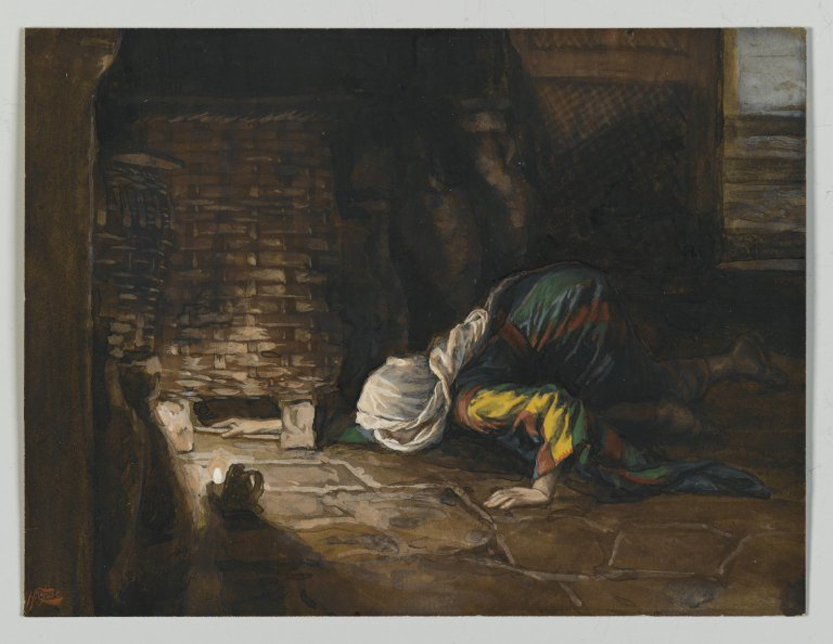
*art, "The Lost Drachma," James Tissot (1836-1902), from the vanderbilt divinity library digital archives
Thursday, September 01, 2022
THE COST OF DISCIPLESHIP
Sunday's lection from Luke reminds those of us who call ourselves Christian that following Jesus of Nazareth has never been--and will never be--a picnic nor a walk in the park. The cost of discipleship is very high. The cross that Jesus talks about does not refer to the challenge of being married to your spouse, nor the responsibility of taking care of elderly relatives, nor the burden of pastoring a metropolitan church, nor to any of the other metaphorical "crosses" we have come up with.
The cost of discipleship is very high. It's completing the tower. It's winning the battle. We don't go build without finishing. We don't wage war in order to lose.
Many among us want to go to heaven, but are afraid to die. Many among us want to be resurrected, but are afraid to be crucified. Many among us want to see a new day, but are afraid of the night. We cannot have one without the other.
My friends, we cannot trully follow Jesus unless we are ready to carry our cross. When Jesus calls us, he bids us, "come and die."
*art, "The Cost of Discipleship," from inductivebiblestudy app, 2020.
Friday, August 26, 2022
"KNOW THY PLACE"
Sunday's lection resonates with our experiences around the dinner table (which, in many cases, is not really round). We know who sits where. In many homes we know who sits at the head and at the foot of the table. We are expected to know our place. And this seating arrangement applies in our churches as well. How many times have we experienced being told that these seats or those pews are for the exclusive use of this or that family? When I was younger I assumed that the name plates were in honor of the donors. I soon realized--after being told to move--that those name plates identified who had exclusive rights to those pews.Years ago, I visited a church where I felt totally unwelcomed. I did not wear the required three-piece suit for men. I also had the wrong skin color.
Friends, let us never forget that the early church was known for its open table, its radical hospitality, and its proclamation of good news to the poor. The church is not a building. The church is not an exclusive club. The church, the one Jesus challenges to be light, salt, and seed, are people who love.
*art, "The Poor Invited to the Feast," JESUS MAFA, 1973 (from the vanderbilt divinity library digital archives)
Friday, August 19, 2022
PAIN HAS NO SABBATH
My friends, the exchange between Jesus and the synagogue leader is not about good and bad. It is about good and good. How do we choose? Justly. The synagogue leader was saying: you can heal her any other day except today. He was arguing: what is one more day of suffering to someone who has already endured 18 years of agonizing pain? That’s 6570 days of pain. What is one day more? Jesus, on the other hand, was saying: why do I need to heal her any other day when I can do it today! For Jesus, suffering is suffering. Why wait for tomorrow when we can stop it today! The synagogue leader’s opinion is justice delayed. Jesus’s retort was justice right now! The woman despite her agonizing pain, despite her suffering went to the synagogue regularly. Did you think for one second that her pain rested during those Sabbath days? Did you think her suffering stopped while she sang, chanted, and studied the Torah? Do not forget this, ever: suffering does not have Sabbaths. Oppression has no rest days. Evil does not rest.
Pain has no Sabbath!
Do you think the suffering, humiliation, and discrimination that Palestinians experience stop during Sabbath? Do you think our Lumad sisters and brothers get Sundays off from the displacement, dispossession, and militarization they experience from the AFP, CAFGU, and private armies of mining corporations? Do you think the pains, the suffering, and the diseases that afflict close to a billion of the world’s children caused by malnutrition, poverty, and hunger cease every time they attend mass or praise and worship? Suffering does not have sabbaths. Oppression has no rest days. Evil does not rest!
Thus, the struggle for life, for liberation, for wholeness, for abundant life for all has no rest days as well. This is why Jesus always healed on the Sabbath. This is why he proclaimed release to the captives and set the oppressed free on the Sabbath. This is why we are challenged to do the same. Every single day! My friends, today is the day of liberation. Of course, we can wait for tomorrow but tomorrow might be too late. Proclaim release to the captives! Let the oppressed go free!
NOW!
*image, "Christ Healing the Crippled Woman who was Bent Over, " from the Vanderbilt Divinity Library Digital Archives (copyright source: Prof. Patout J. Burns and Prof. Robin M. Jensen)
Friday, August 12, 2022
T R O U B L E M A K E R S
What does this fire that Jesus brings in Sunday's lection do? It disrupts, it divides, it disturbs the "Peace": Pax Romana.
The peace founded on victory in war. The peace defined, justified, legislated and imposed by the powerful, propertied, and privileged. The peace built on the blood and bodies of the displaced, dispossessed, and disfigured. The peace that produces so many widows, orphans, and strangers.
The peace where the father was head of the family and everyone was his property. And the peace where the rich got richer and declared heaven-blessed while the poor got worse and judged accursed! The peace where the Emperor was the father of all fathers.
Historians tell us that Christians were never called peacemakers in the earliest days of the Jesus movement. They were called troublemakers. They disrupted. They divided. They were disturbers of Rome's Peace.
These days, the powerful, propertied, and privileged keepers of "Peace and Order" have different names for troublemakers (who, thank God, still include many Christians). They are called activists, militants, dissenters, leftists, communists, rebels, Palestinians, and yes, terrorists!
Troublemakers are the reasons we have hope!
#25percentrevolution
#IAmWithJesus
#JusticeForNewBataan5
#JusticeForMyanmar
#FreePalestine
#EndTheCultureOfImpunity
*image from "Queer Eye for the Lectionary."
Monday, August 01, 2022
RICH FOOLS
I read somewhere that Rockefeller was asked how much money would satisfy him. His answer? More. In the part of the Philippines where I reside, there are vast tracts of land, thousands of hectares, owned by one family. Ibon Foundation has reported that the net worth of the richest Filipinos rose during the pandemic as millions faced joblessness, homelessness, and hopelessness.
THE FRIEND AT MIDNIGHT
Thursday, July 14, 2022
MARTHA AND MARY
I would argue that we can find historical memory in the Lukan passage. Martha and Mary’s home was a house church, open to everyone: a sanctuary. Martha and Mary were involved in the diakonia of the open table. There are scholars who argue that the sisters were once wealthy, and the lack of servants in the narrative and Martha doing all the preparations by herself, showed that they had followed what Jesus required from the rich.
Jesus’s admonition to her that “there is need for only one” is a reminder to us that, one dish was enough, “tama na ang isang ulam,” especially for the poorest of the poor who were most welcome in these house churches. Maybe Martha, so used to feasts and banquets, momentarily forgot that--for those whose only hope is God-- there is need for only one.
That Jesus is referred to as LORD three times in the passage reminds us of the Basileia movement’s most fundamental, subversive affirmation: JESUS IS LORD AND NOT CAESAR! And to proclaim that Jesus is Lord is to proclaim the good news for the poor.
What about Mary choosing the better part? But what is the better part? Martha and Mary’s sanctuary was a home, not a cathedral most churches today want their worship places to be. Jesus admonished Martha that the open table needed just one dish for everyone, not a feast or a banquet most of us believe are expressions of hospitality, prosperity, and fullness today. And he praised Mary for focusing on the guest: the neighbor. [In the Lukan narrtive, the neighbor includes strangers and enemies!]
And because most of us are not poor, we forget that for millions of people in the world who gargle water for breakfast, drink hot water for lunch, and cry themselves to sleep for supper, a welcoming home and a simple meal is God’s shalom!
#IAmWithJesus
#25percentrevolution
#JusticeForMyanmar
#FreePalestine
#JusticeForNewBataan5
#EndTheCultureOfImpunity
*art, "Martha and Mary," JESUS MAFA, 1973 (from the vanderbilt divinity library digital archives).
Friday, July 08, 2022
THE "BAD" SAMARITAN
We identify with the Samaritan. We name our institutions after him. I know of a Good Samaritan Hospital, a Good Samaritan Church, and a Good Samaritan Multi Purpose Credit Cooperative. But before we continue patting each other's backs and celebrating, let us remember what Samaritan meant during Jesus’s time.
There were at least three groups of people that were most hated and despised during Jesus’s time. Centurions, tax collectors, and Samaritans. These were the bad guys. Jesus's enemies pejoratively call him a Samaritan.
Priests and Levites were the good guys. They were models of society in word and deed. They were expected to help the wounded, their fellow Jew, on that "bloody way" connecting Jerusalem to Jericho. But they did not.
The bad guy did. Ironically, to this day, the bad guys still do. They continue to help the wounded, rescue the dying, save the half-dead. But we don't call them Samaritans anymore. We call ourselves that now. We even added a qualifier, the "Good" Samaritan.
But, tragically, we still do not stop and help. We have even come up with the best excuses for our inaction, apathy, and indifference: especially if the wounded is Indigenous, Black, Palestinian, Rohingya, LGBTI+, PLHA, communist, or, simply, different from us.
The bad guys do not care about labels. They are red-tagged, vilified, harassed, and demonized. Yet, they continue helping the wounded along the world's bloody ways.
*art, "The Good Samaritan," JESUS MAFA, 1973 (from the vanderbilt divinity library digital archives).
Friday, June 24, 2022
I HAVE DECIDED TO FOLLOW JESUS
Foxes having holes and birds having nests allude to the imperial family and its domain-- the basic hierarchical unit of society--that provided food, clothing, shelter, safety, security, and honor. Those who follow the "homeless" Son of Man are members of a different oikos, God’s oikos where widows, orphans, and strangers are the most privileged and where even the most unwelcome is always welcome. Yes, even beggars.
Burial rites are again part of the rituals and obligations of the imperial family. Going and proclaiming good news to the poor, release to the captives, recovery of sight to the blind, to let the oppressed go free, and to proclaim the year of the Lord’s favor, God's jubilee of justice, takes priority.
Anyone who has put a hand to the plow knows that looking back is unacceptable. The one who has decided to become a farmer in the Kingdom of God but yearns to go back to farming for the Kingdom of Rome, the complete opposite direction, is not fit to follow Jesus.
The song we learned in Sunday School is true. There is no turning back.
Those who think that following Jesus of Nazareth is easy, rewarding, and will bring us closer to heaven are following the wrong Jesus.
#25percentrevolution
#JusticeForMyanmar
#JusticeForNewBataan5
#FreePalestine
#EndTheCultureOfImpunity
#IAmWithJesus
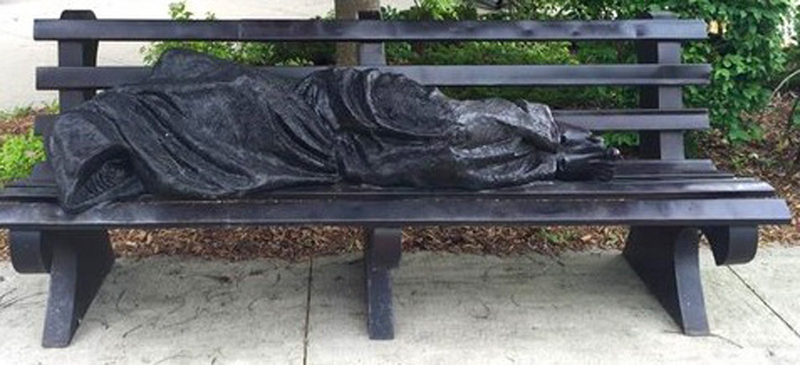
*art, "Homeless Jesus," sculpture by Timothy Schamlz (at King's University College, Ontario), image from vanderbilt divinity library digital archives.
Friday, June 17, 2022
FATHER'S DAY
Sunday is Father's Day. We learned early in school that the family is the basic unit of society. The familia, with the father as its head, go back to the Ancient Romans. The father had absolute power over everyone in his family. Absolute meant exactly that: the father can disown, sell, even kill his children. For many fathers in antiquity, children were property. Possessions.
For the Ancient Romans, the emperor was the father of all fathers. For the emperor, occupied peoples and nations were property. Possessions.
Sunday's lection from Luke (which is also found in Mark and Matthew) possibly echoes the Roman army's massacre of Jewish rebels in Gerasa by Vespacian's general, Lucius Annius, around 67 CE. The "occupying forces" who possessed the Gerasene in the narrative is named Legion (which was the largest military unit of the Roman Army).
Jesus's exorcism reminds us, especially those among us who are fathers, that people are not property nor posessions. Especially not our children. And if we think they are, then we need an exorcism.
Sunday is Father's Day. It can also be Exorcism Day.
#EndTheCultureOfImpunity
#JusticeForNewBataan5
#JusticeForMyanmar
#FreePalestine
#25percentrevolution
*art, "Jesus, the Gerasene, and the Unclean Spirits," James Tissot, Brooklyn Museum (available at vanderbilt divinity library digital archives).


.jpg)